

The 10 Most Significant Physics Breakthroughs of 2025
From the 2025 Nobel Prize to Cosmic Ripples: How this year reshaped our understanding of the universe.

2025 was recognized as the International Year of Quantum Science and Technology. This year, scientists indeed made several breakthroughs in the microscopic realm. But there have also been some significant discoveries in the realm of very large. From atomic-scale revelations to cosmic ripples in spacetime, these discoveries and advances didn’t just push boundaries, but reshaped them.
I’ve spent the last week curating for you a list of the 10 most significant physics breakthroughs of 2025. Let's begin with the special mention:
Nobel Prize for Macroscopic Quantum Tunneling
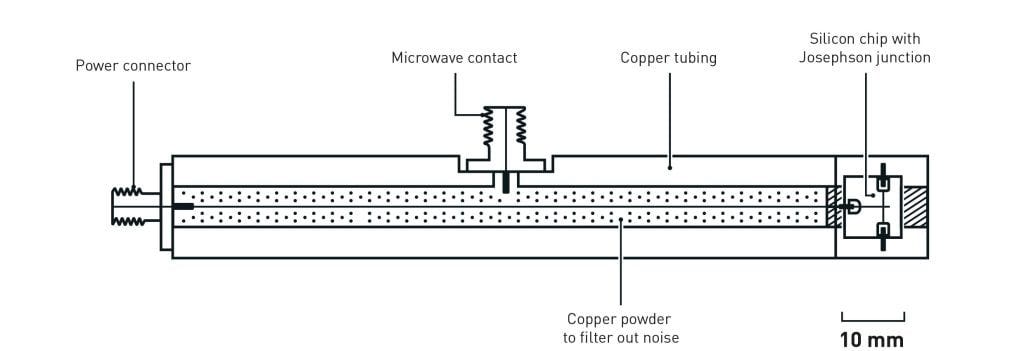
The 2025 Nobel Prize in Physics was awarded to John Clarke, Michel Devoret, and John Martinis for their experiments in the 1980s that exhibited quantum phenomena like tunnelling and energy quantisation in macroscopic superconducting circuits. This discovery is significant because it highlights how quantum behavior isn’t confined to the microscopic world and can be engineered and observed in human-scale systems.
Today, superconducting qubits have become the most advanced platform for quantum information processing.
I personally covered this story, and it was my 2025’s most appreciated article. Explore more:

1. First Ever Two-Dimensional Metals
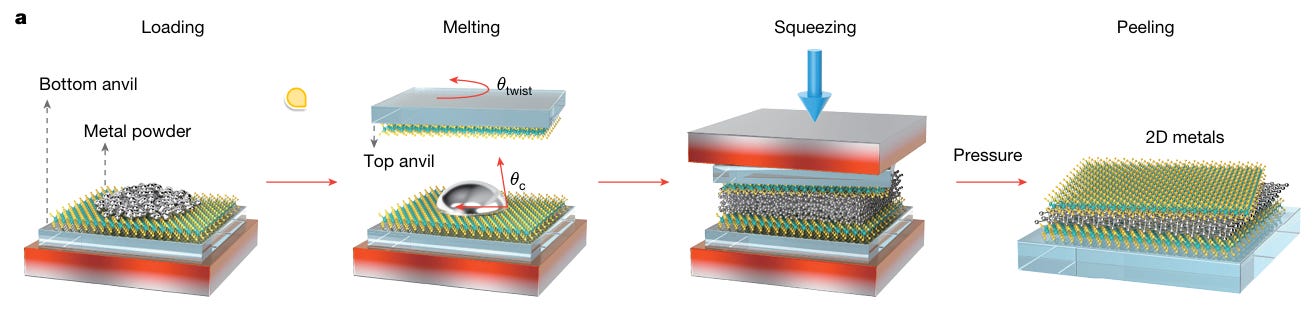
Named as Physics World’s 2025 Breakthrough of the Year, one of the most stunning achievements this year was the creation of atomically thin sheets of metal. This feat was thought to be chemically impossible because, unlike graphene or other 2D materials that peel apart easily, metals have strong bonds in all directions. Yet a team led by Guangyu Zhang and colleagues managed to make monolayer bismuth, tin, lead, indium, and gallium by a clever “van der Waals squeezing” process.
These 2D metals open up new avenues in materials science, electronics, and quantum devices. This could pave the way for transistors that are essentially “transparent” to electrons.
Explore more: Two-dimensional metals make their debut
Research Paper: Realization of 2D metals at the ångström thickness limit
2. Highest-Resolution Images of Single Atoms
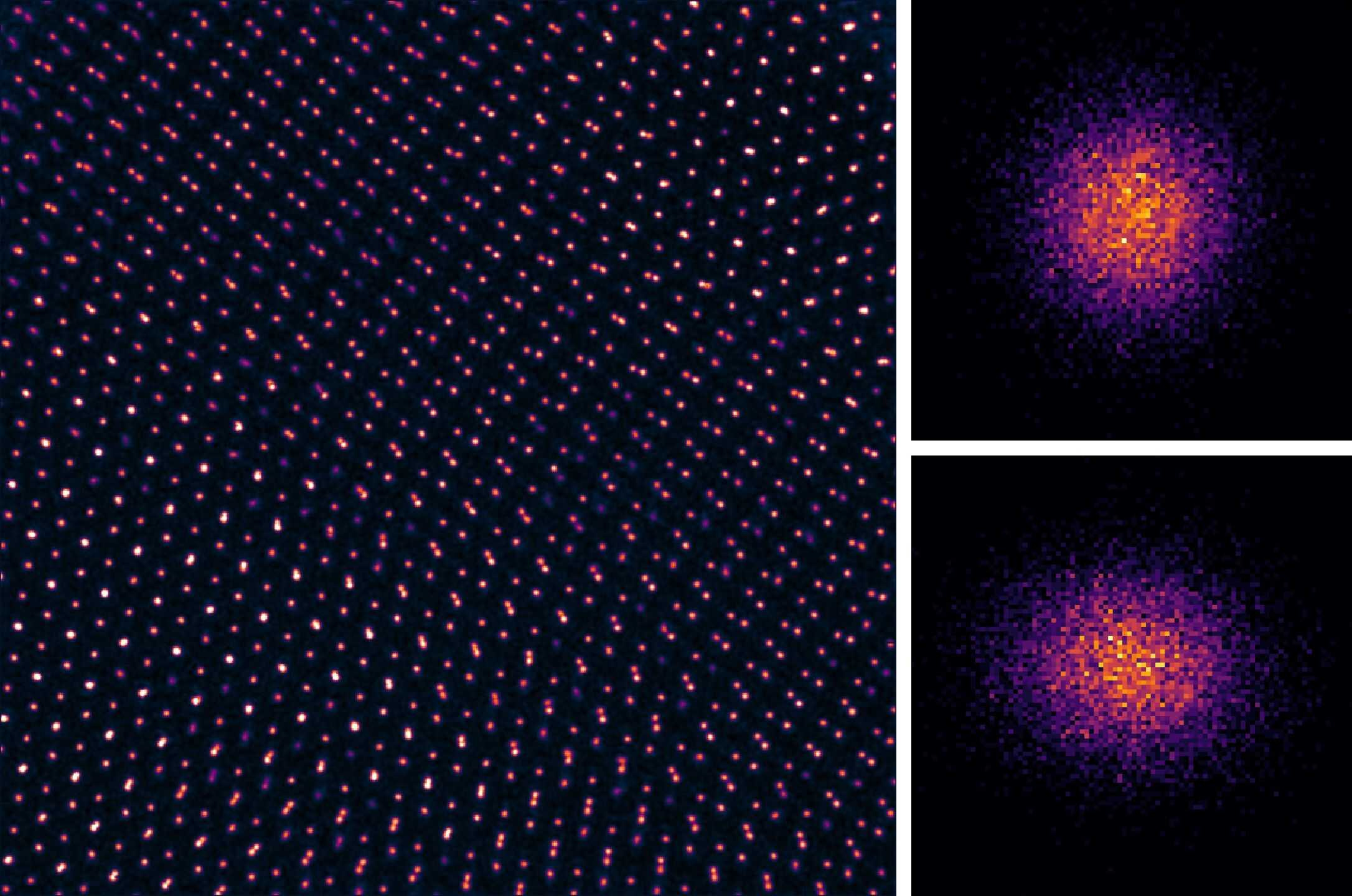
For the first time, physicists imaged individual atoms at picometer resolution (~15 pm, or a tenth of the size of an atom itself) using advanced electron ptychography. This allowed direct observation of collective lattice vibrations called “moiré phasons” in twisted 2D materials. The ability to see and study such subtle quantum behavior is a huge leap for condensed-matter physics and materials engineering.
Explore more: Highest-resolution images ever taken of a single atom reveal new kind of vibrations
Research Article: Atom-by-atom imaging of moiré phasons with electron ptychography
3. Quantum Control of a Single Antiproton
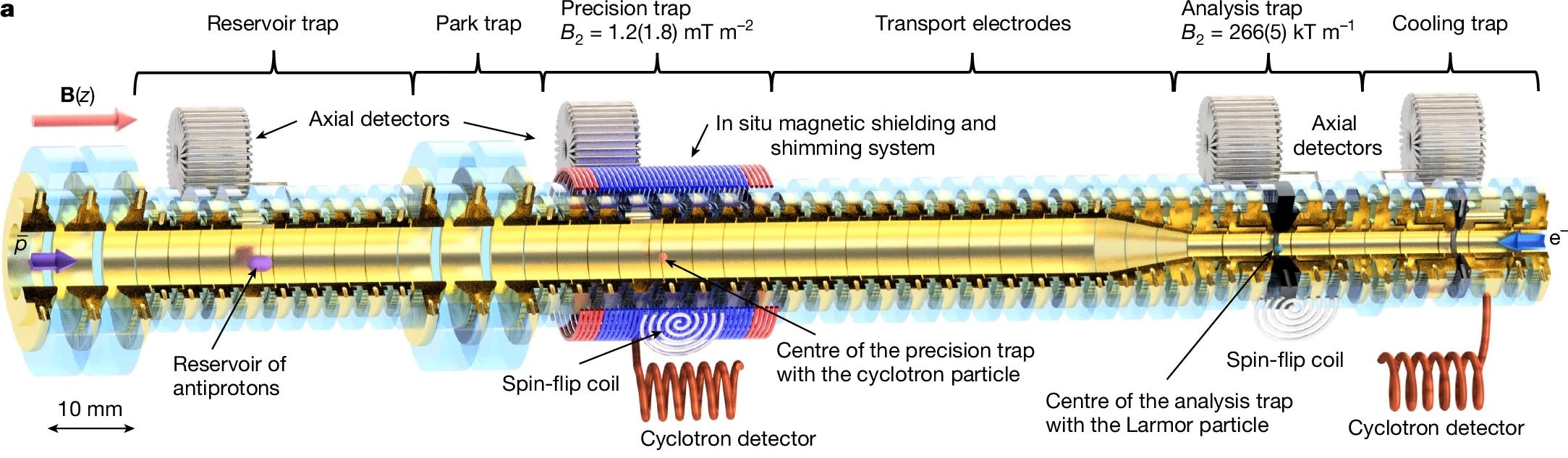
In a triumph for precision physics, researchers of CERN’s BASE collaboration achieved coherent spin spectroscopy on a single trapped antiproton (the antimatter counterpart of a proton). By manipulating an antiproton in a cryogenic trap for months, they measured its magnetic properties with unprecedented precision.
Physicists are looking for the tiniest “crack” in the Standard Model that might explain why we live in a universe of matter rather than an empty void of light. This not only tests the Standard Model more stringently than ever before, but also pushes us closer to understanding why matter dominates antimatter in the universe.
Explore more: A quantum leap for antimatter measurements
Research Paper: Coherent spectroscopy with a single antiproton spin
4. GW250114: Clearest Gravitational Wave Signal Yet
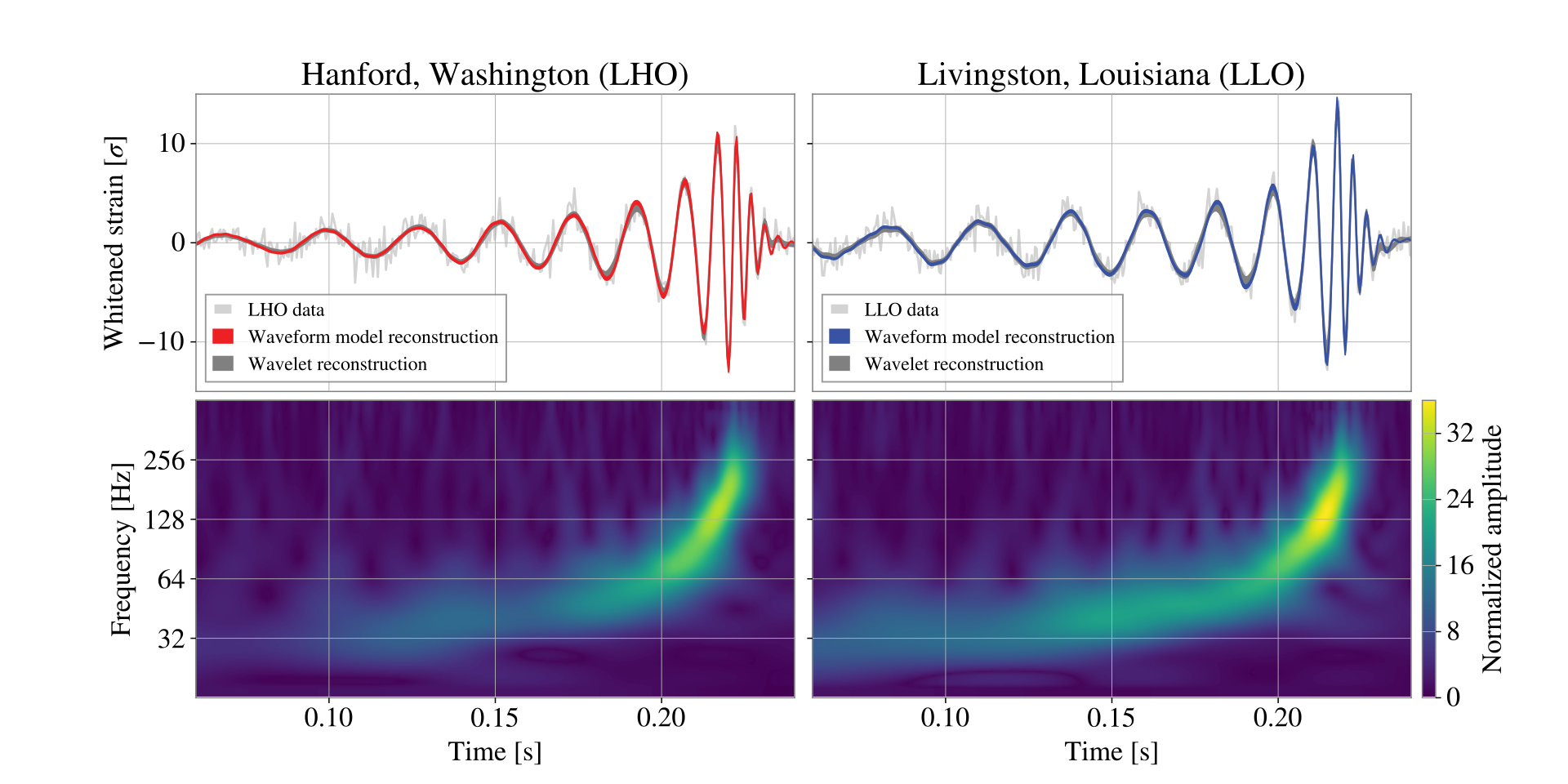
The LIGO detectors captured an extraordinary gravitational wave signal from a collision of two black holes. Scientists were able to extract the first clear overtone of spinning black hole ringdown modes, and the data confirmed Hawking’s area theorem and the Kerr nature of the black holes with remarkable precision.
This isn’t just another gravitational-wave event. It’s a quantitative test of Einstein’s general relativity under extreme conditions.
I personally covered this story.
Explore More:

Research Paper: GW250114: Testing Hawking’s Area Law and the Kerr Nature of Black Holes
5. Superfluidity in Hydrogen Molecules
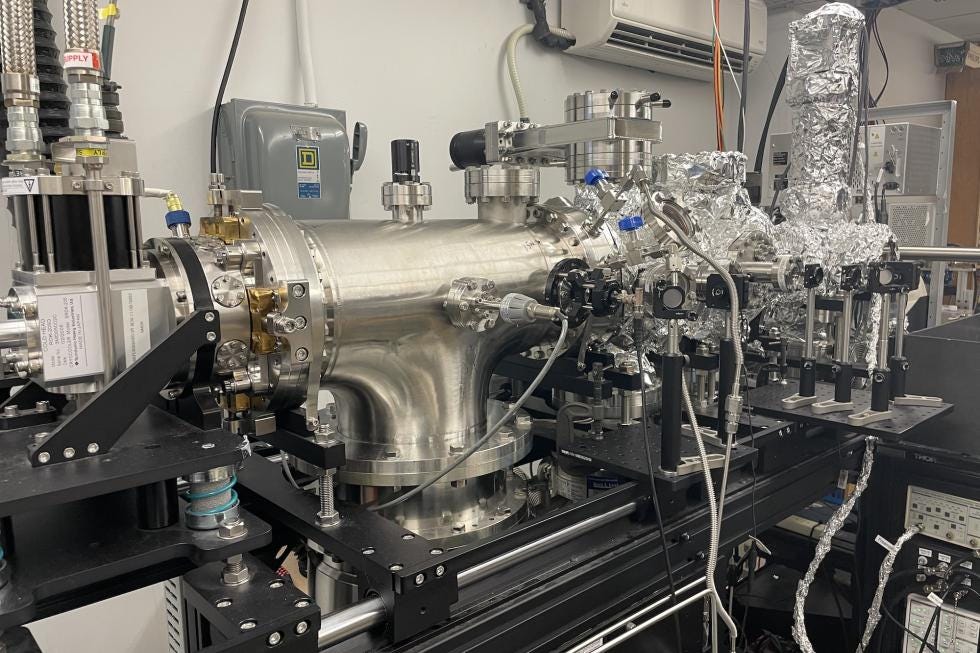
Imagine a single molecule that can rotate without any friction. Takamasa Momose and Susumu Kuma achieved this by cooling molecular hydrogen to near absolute zero. This “superfluid molecule” behaves like a tiny, frictionless quantum top, giving us a brand-new way to study the transition between classical chemistry and quantum mechanics.
Seeing superfluidity in molecular systems like hydrogen not only enriches quantum many-body physics but also influences how we imagine hydrogen’s role in future quantum and energy technologies.
Explore more: Superfluid phase spotted in molecular hydrogen for the first time
Research Paper: Exploring molecular superfluidity in hydrogen clusters
6. Exoplanet Weather Mapping

Astronomers mapped the weather patterns on WASP-127b, a gas-giant exoplanet, revealing supersonic winds and temperature distributions thousands of light-years away. This is a step toward comparative climatology beyond our solar system, helping us understand how planets and atmospheres behave under extreme conditions.
Explore more: Astronomers create a ‘weather map’ for a gas giant exoplanet
Research Paper: CRIRES+ transmission spectroscopy of WASP-127 b
7. Earthquake Early-Warning Using Smartphones

Physics met the real world with a global smartphone-based earthquake early-warning network. By harnessing accelerometers in millions of Android phones worldwide, scientists have built a distributed sensor grid capable of detecting and alerting users about earthquakes with unprecedented reach. It’s an elegant example of physics + technology serving society on a global scale.
Explore more: Android phone network makes an effective early warning system for earthquakes
Research Paper: Global earthquake detection and warning using Android phones
8. Hollow-Core Fibers
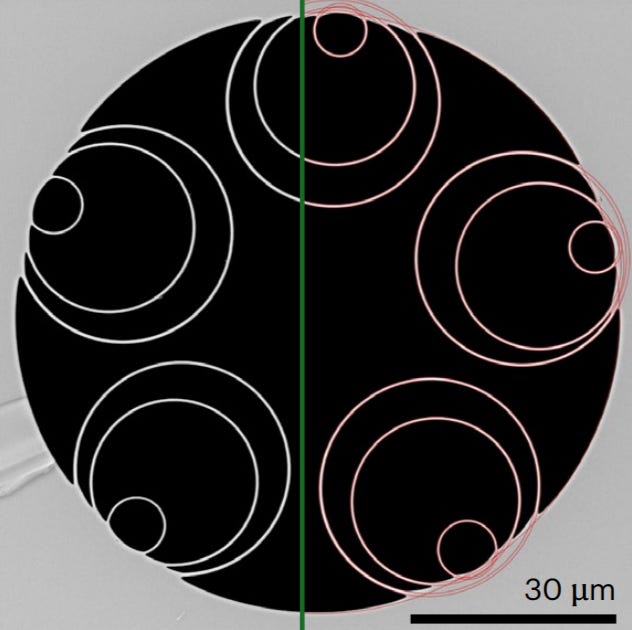
Microsoft and the University of Southampton smashed a 40-year limit on fiber optic transmission. By replacing the glass core with air and using membranes to trap light, they reduced signal loss and boosted speeds by 45%. This isn’t just for faster internet; it’s a massive win for low-latency quantum networks.
Explore more: New hollow-core fibres break a 40-year limit on light transmission
Research Paper: Broadband optical fibre with an attenuation lower than 0.1 decibel per kilometre
9. Protein Qubits
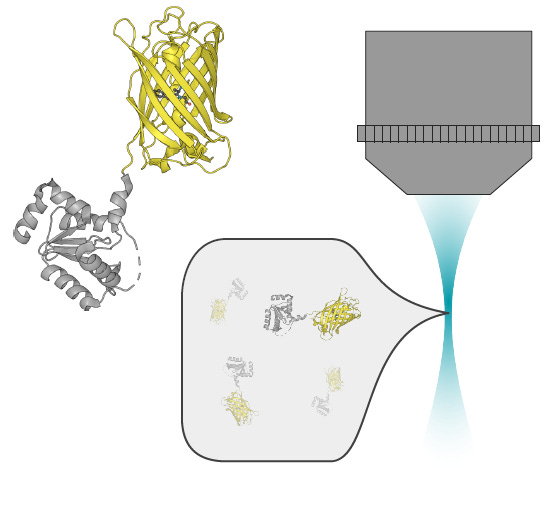
In a groundbreaking crossover between biophysics and quantum technology, researchers at the University of Chicago designed a quantum bit (qubit) composed of fluorescent proteins. These can be grown directly inside a living cell, acting as ultra-sensitive magnetic field sensors. It’s the closest we’ve ever come to a “quantum microscope” for biology.
Explore more: Protein qubit can be used as a quantum biosensor
Research Paper: A fluorescent-protein spin qubit
10. Proton Arc Therapy
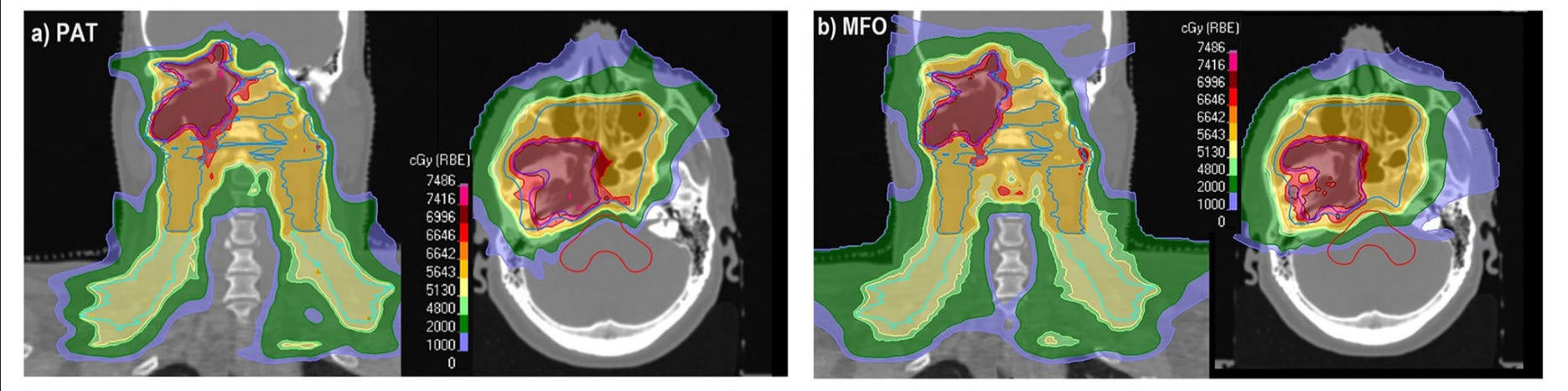
In a massive win for applied physics, the Trento Proton Therapy Centre delivered the first clinical treatments using Proton Arc Therapy (PAT). Unlike traditional proton beams, PAT “paints” the dose in a continuous arc, significantly reducing radiation to healthy tissue. It’s a perfect example of how high-energy physics saves lives.
Explore more: World’s first patient treatments delivered with proton arc therapy
Research Paper: Static proton arc therapy: Comprehensive plan quality evaluation and first clinical treatments in patients with complex head and neck targets
Why 2025 Matters
Physics is often seen as a cold pursuit of numbers, but 2025 proved it is the most human of endeavors. By bridging the gap between the invisible and the tangible, we’ve moved past simply observing nature to actively dancing with its most fundamental laws.
We see deeper: From the jitter of a single atom to the echoes of black holes.
We control better: Mastering antimatter and macroscopic quantum states.
We apply wiser: Transforming physics into life-saving medicine and global safety.
We are no longer just spectators of the universe’s grand design. With 2D metals in our hands and quantum sensors in our cells, the boundary between "lab" and "world" is thinner than ever. Welcome to the future.


.jpg)
This was a fascinating read. I really appreciated how you highlighted breakthroughs that move physics from observation into real-world impact.
I reckon 2026 would be even more exciting from a Physics POV. Happy new year chaps!! Keep up the good work bro.