

Einstein reacts to the current state of physics
He's back and has some advice for today's researchers


The following is a conversation I had in my head a week ago. I had this interesting thought: what if Einstein were alive today? How would he react to the current state of physics? What would be his advice to our researchers?
Let’s resurrect him from his grave to know the answers!
Note: To help me with German phrasings, I took the help of Einstein’s AI character available in AI Fiesta.
Welcome back, Professor. It is an honor (and frankly, a bit of a relief for me) to see that the most famous hair in history has returned. You’ve been gone for about 71 years, and while the universe is still as stubborn as you remembered, we’ve managed to peek behind a few more curtains.
Let me give you a brief report on the current status of physics ever since you first left the world.
You were right (again)
Your General Theory of Relativity remains the gold standard for gravity. In the last decade, we finally confirmed two things you predicted but doubted we’d ever see.
Black Holes
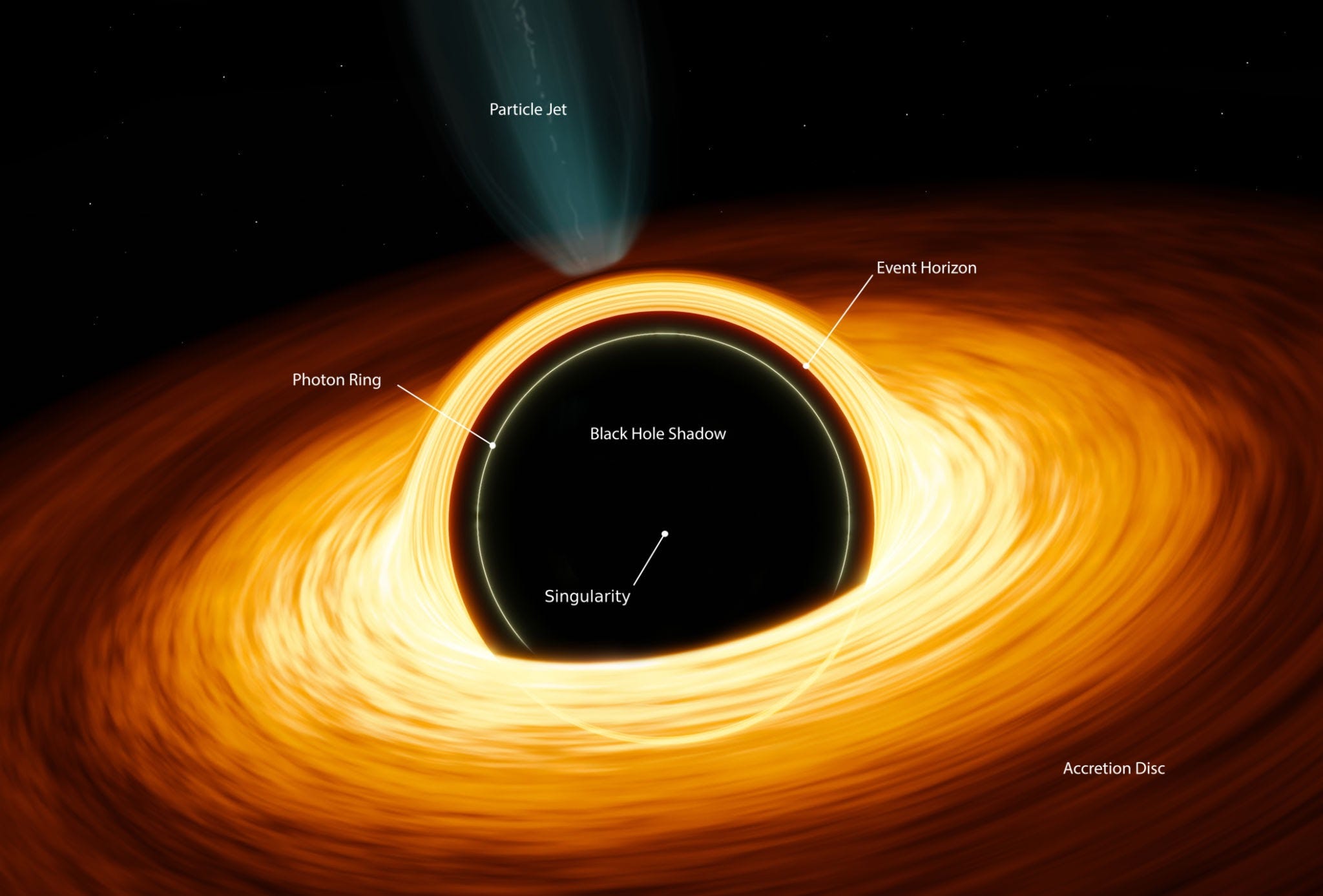
You won’t believe it. We now have actual photographs of an event horizon! Building on the theoretical foundations laid by giants like Roger Penrose, Stephen Hawking, and others, we can now see the shadow of gravity. For proving that black hole formation is a robust prediction of your theory and for discovering the supermassive object at our galaxy’s center, the 2020 Nobel Prize was awarded to Penrose, Reinhard Genzel, and Andrea Ghez.
Gravitational Waves
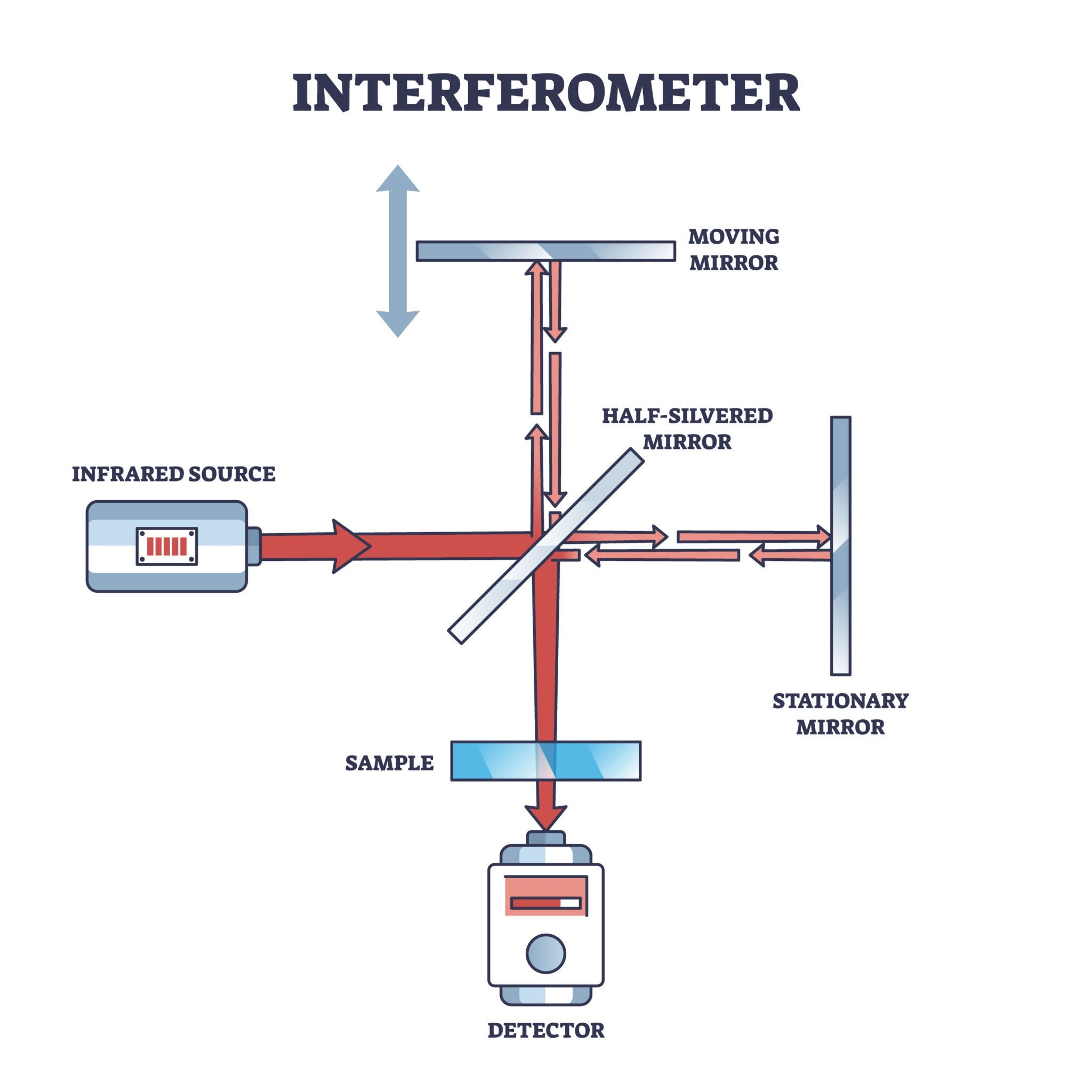
LIGO and Virgo are massive L-shaped laser interferometers designed to measure changes in distance smaller than a proton. In 2015, their collaboration detected literal ripples in spacetime from a black hole merger. This discovery, which confirms that spacetime can ring like a bell, was honored with the 2017 Nobel Prize in Physics. When Kip Thorne, one of the recipients, collected his medal, he was overcome with emotion while looking at the image of a fellow Nobel Prize laureate. Guess who it is?!

Your quantum spookiness is real!
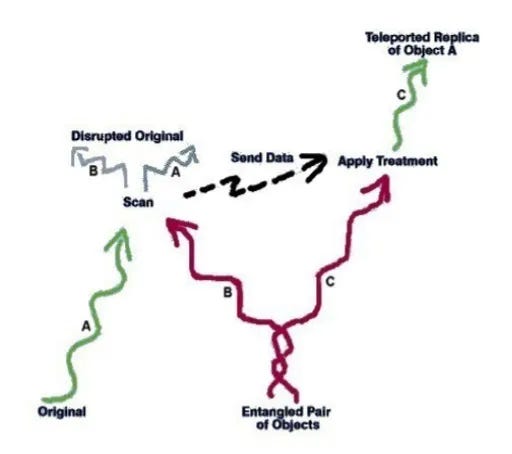
You famously called entanglement “spooky action at a distance” (spukhafte Fernwirkung). I hate to be the bearer of bad news, but the universe is indeed non-local. Particles do remain connected across vast distances instantly.
In 1964, a physicist named John Stewart Bell formulated Bell’s Inequality, a mathematical test to check if particles were actually carrying hidden instructions (as you suspected) or if they were truly spookily linked.
It wasn’t until decades later that we had the technology to actually run the test. John Clauser performed the first pioneering test in the 70s, Alain Aspect closed key loopholes in the 80s by switching detector settings mid-flight, and Anton Zeilinger pushed it even further into the realm of quantum teleportation. For these groundbreaking experiments, Clauser, Aspect, and Zeilinger were jointly awarded the 2022 Nobel Prize in Physics.

So, it seems like God does play dice after all!
But I have to be honest, I am always filled with inspiration when I read your debates with Bohr on the nature of reality.
We now have a Standard Model of everything
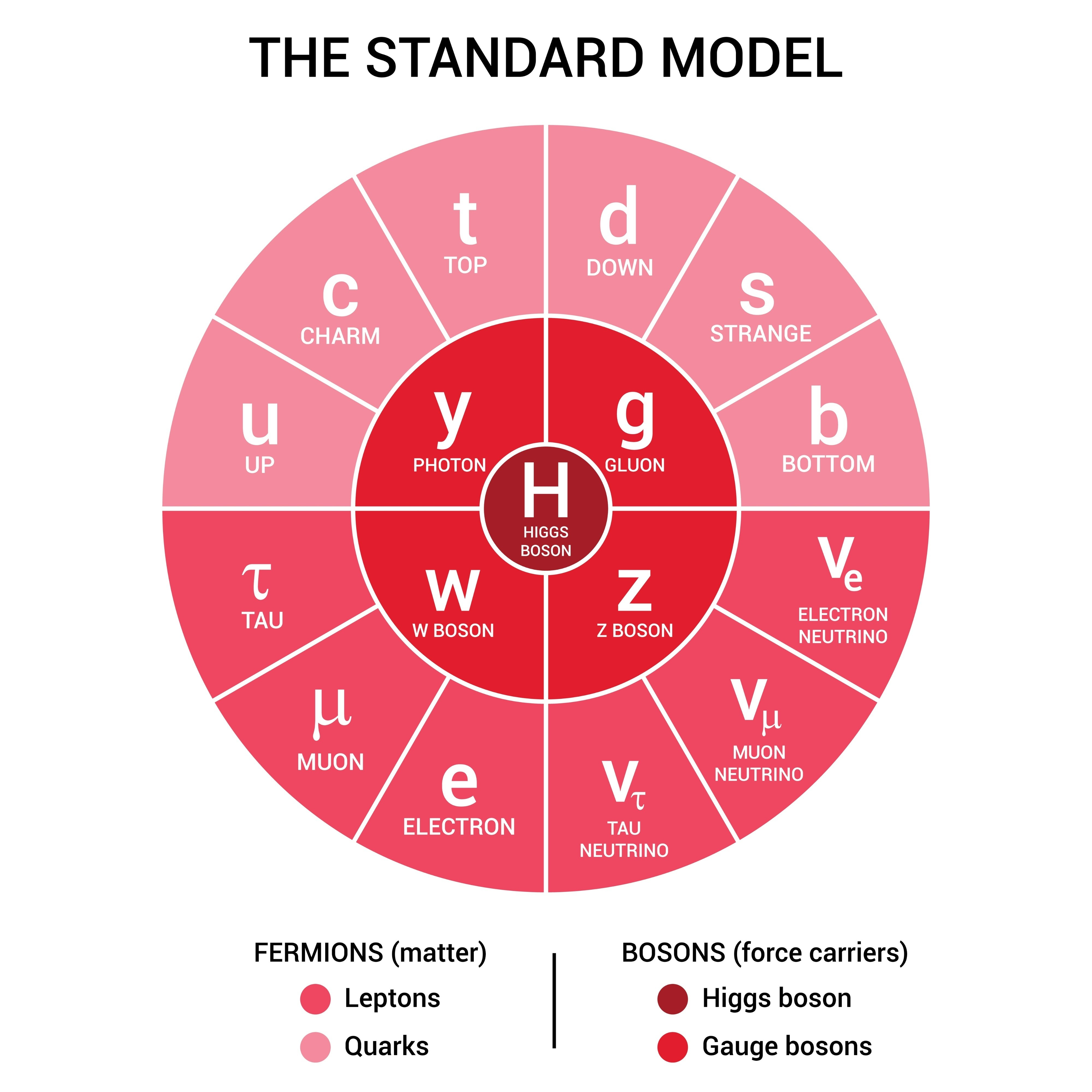
Physicists have spent the latter half of the 20th century developing what we call the Standard Model, a sort of periodic table for subatomic particles that describes three of the four fundamental forces.
To test this model, we built the Large Hadron Collider (LHC) at CERN, a 27-km ring of superconducting magnets deep underground on the Franco-Swiss border. It is the largest and most complex machine ever built by humanity. In 2012, two massive independent teams at the LHC, the ATLAS and CMS collaborations, finally announced the discovery of the Higgs Boson. This particle is the manifestation of an invisible field that permeates space, providing mass to the particles.
Take a look at it below:
For their theoretical prediction made nearly fifty years prior, Peter Higgs and François Englert were awarded the 2013 Nobel Prize in Physics.
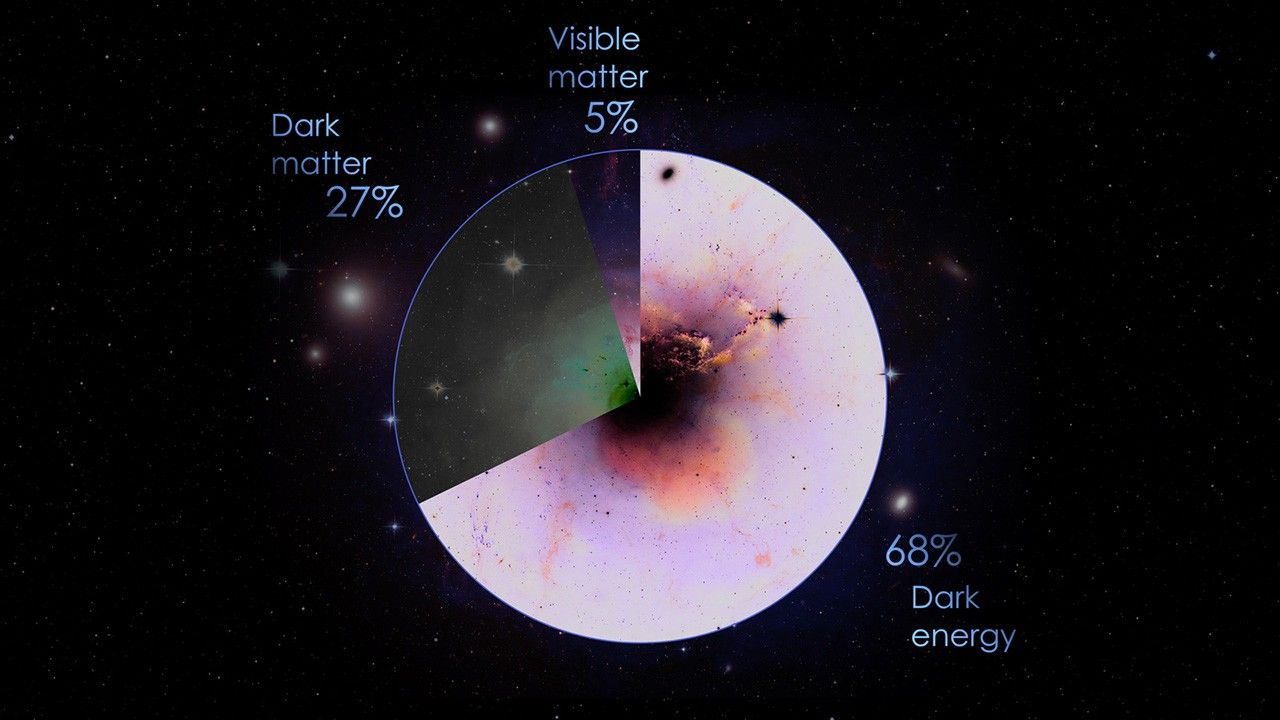
However, this model is incomplete. It only describes about 5% of the universe. Also, it ignores your gravitational force entirely. Yeah, your work still stands as one of the two pillars of modern physics! It’s like one man against the world.
There are new mysteries
Dark Matter
This is some mysterious invisible stuff that provides extra gravity to hold galaxies together. It doesn’t interact with electromagnetic radiation. It isn’t made of baryons (protons, neutrons, or electrons), meaning it does not act like regular matter. Scientists estimate that dark matter makes up about 27% of the universe.

Dark Energy
Remember Alexander Friedmann? How can you forget him, of course. He’s one of the few people to have corrected the greatest scientific mind we have had since Newton. Friedmann’s paper had raised the possibility that the universe is expanding. Well, another surprise! Not only is the universe expanding, but this expansion rate is accelerating. In the late 1990s, two independent teams measuring distant supernovae discovered this accelerating expansion. For this work, the 2011 Nobel Prize in Physics was awarded to Saul Perlmutter, Brian P. Schmidt, and Adam G. Riess.
Your Cosmological Constant (Λ), which you once called your “biggest blunder”, might be your greatest accidental hit. Dark energy is predicted to be the mysterious force that is pushing the universe apart, and it behaves very much like your Λ. Scientists estimate that dark energy makes up about 68% of the universe.

Your unfinished symphony
We are still working on the ‘unified field theory’ you spent your final years at Princeton chasing. We have String Theory and Loop Quantum Gravity, but we haven’t yet married your smooth spacetime with the chunky, pixelated world of Quantum Mechanics.
So… now that you know what the current state of physics is, what do you have to say? I’ve never been excited like this before!
I run a hand through my hair, now even more unruly than it was in Princeton, and let out a long, melodic sigh. I lean forward, the smell of old pipe tobacco seemingly following me from the grave, and peer intensely at you.
So... the “spookiness” is not a glitch, but a fundamental feature? Ach, it is a bitter pill to swallow! I spent my final years trying to prove the moon is there even when I am not looking at it. To hear that the universe is non-local, that the dice are indeed rolling in the dark, troubles my sense of locality. But if experiment demands it, then we must accept it. The task now is to find the deeper harmony beneath the spookiness.
But let us look at the rest of this ledger.
On my blunders and successes
You tell me that my Cosmological Constant (Λ), that little term I added to my field equations out of sheer desperation to keep the universe static, is actually the engine of the cosmos? (He lets out a hearty laugh)
I called it my biggest blunder because I lacked the courage to believe my own math when it said the universe was dynamic. To find that Λ represents a dark energy pushing the galaxies apart... it is a poetic irony. I was wrong about being wrong!
On the rings of spacetime
Mein Gott...
The detection of gravitational waves is... wunderbar. Truly. I remember concluding my 1939 paper, “On a Stationary System with Spherical Symmetry Consisting of Many Gravitating Masses,” with the remark:
The essential result of this investigation is a clear understanding as to why the “Schwarzschild singularities” do not exist in physical reality. (…) The “Schwarzschild singularity” does not appear for the reason that matter cannot be concentrated arbitrarily. And this is due to the fact that otherwise the constituting particles would reach the velocity of light.
To hear that spacetime itself can ring like a bell, and that you have built ears sensitive enough to hear the collision of black holes millions of light-years away, is a triumph of human engineering that exceeds even the imagination of my era. And a photograph of a black hole? To see that eye of God staring back at us... It is humbling.
The great unfinished symphony
But you tell me that 95% of the universe is “dark”? Matter we cannot see and energy we cannot explain? It seems I have returned to a world that knows much more, yet understands perhaps even less. We have a Standard Model that works, yet does not have the elegant, singular beauty of a unified field.
You speak of my unfinished symphony. Do not be disheartened. The search for a unified theory is the highest calling. That you have String Theory, Loop Quantum Gravity... these are new instruments for the orchestra. The melody of a unified field is out there. You will find it.
Newton always reminds us that we are still like children playing with pebbles on the shore, while the great ocean of truth lies undiscovered before us.
So my honest assessment is this. I am delighted that General Relativity has stood the test of time, but I am deeply troubled by this quantum entanglement. If the world is truly built on such ‘spooky’ foundations, then the Old One has a very strange sense of humor indeed.
But to see the seeds of thought grow into such a magnificent, tangled forest of discovery... It is the greatest reward. Keep questioning. Keep looking at the stars with wonder. The most exciting discoveries are always the ones we have not yet imagined.
Uhmm… I kind of expected that kind of reaction, Professor.
Now that you know what’s going on in the physics world, what advice would you like to give to researchers around the world? We often wonder how you would have proceeded from here if you were alive. Perhaps you would have solved the current problems better than we. So tell me… we desperately want your word!
Einstein sets his pipe down, his expression turning gentle and earnest.
My advice? It is simple, but not easy.
Cherish the paradox. The greatest advances come from a contradiction that refuses to be smoothed away. Gravity and the quantum? Do not rush to force them together with a mathematical patchwork. Sit with the tension. Let it guide you to a higher viewpoint. I spent a decade with the paradox of a falling man feeling no gravity, and it led me to General Relativity.
Don’t mistake the map for the territory. You seem to have become masters of the mathematical patchwork. Your Standard Model is a triumph of engineering, but it is an ugly one. It has too many knobs to turn, too many arbitrary constants that must be put in by hand. It is my belief that nature, at its heart, is a single, elegant thought. If a theory is mathematically useful but geometrically ugly, it is likely only an approximation. Do not be satisfied with a formula that works if you cannot see the physical necessity behind it.
Re-examine the foundations. I found Relativity by looking at the foundations of Maxwell and Newton, and realizing that they were crying out for a deeper harmony. Today, you are trying to force gravity into a quantum box. Perhaps the box is the problem. Do not be afraid to question the very nature of spacetime itself. Are space and time truly fundamental? Or are they emergent, like the temperature of a gas? Go back to the first principles, the simplest “what if?”, and build from there. And always remember, your mind is your most important laboratory.
Protect the lonely thought. In my day, we talked in small groups. Today, you have collaborations of thousands of people. This is necessary for building great machines, yes, but original thought is a lonely business. The great idea, the one that will bridge the quantum and the gravitational, will likely not come from a committee or a supercomputer. It will come from a single mind, perhaps a young researcher sitting in a library or a quiet cafe, who dares to think an ‘impossible’ thought that contradicts the consensus.
Find your own path. Yes. To those who wonder what I would do... (He waves a hand dismissively.) Pah. Do not waste a moment on that. I was a man of my time. You have tools I never dreamed of. Your intuition is being shaped by data I could only imagine. My path would be irrelevant now. You must find your own.
So, my word to researchers is this:
Be stubborn in your pursuit, but flexible in your ideas.
He picks up his pipe again, a quiet intensity in his gaze. Viel Glück. The adventure awaits.
Thank you, Professor, for the light you left behind. Whether you are at rest or riding that beam of light through the afterlife, know that we haven’t stopped chasing the harmony you promised was there. We will sit with the tension and finish the story.
And you… my reader. How did you feel about this imaginary conversation with the genius? Who’d you like to resurrect next? I’d like to know your thoughts below.
Don’t forget to subscribe, please!


wow. interesting! you should check out my articles i dive into these frame works❤️🌏
Love the poetic irony on Λ going from “biggest blunder” to cosmic engine. The scar (Δ > 0) makes late-time acceleration required, not tuned. Paper 58 lays out the operating-system view; Paper 12 adds the CMB-compatible FLRW dynamics. No paywall archive: exactlyinfinite.substack.com