


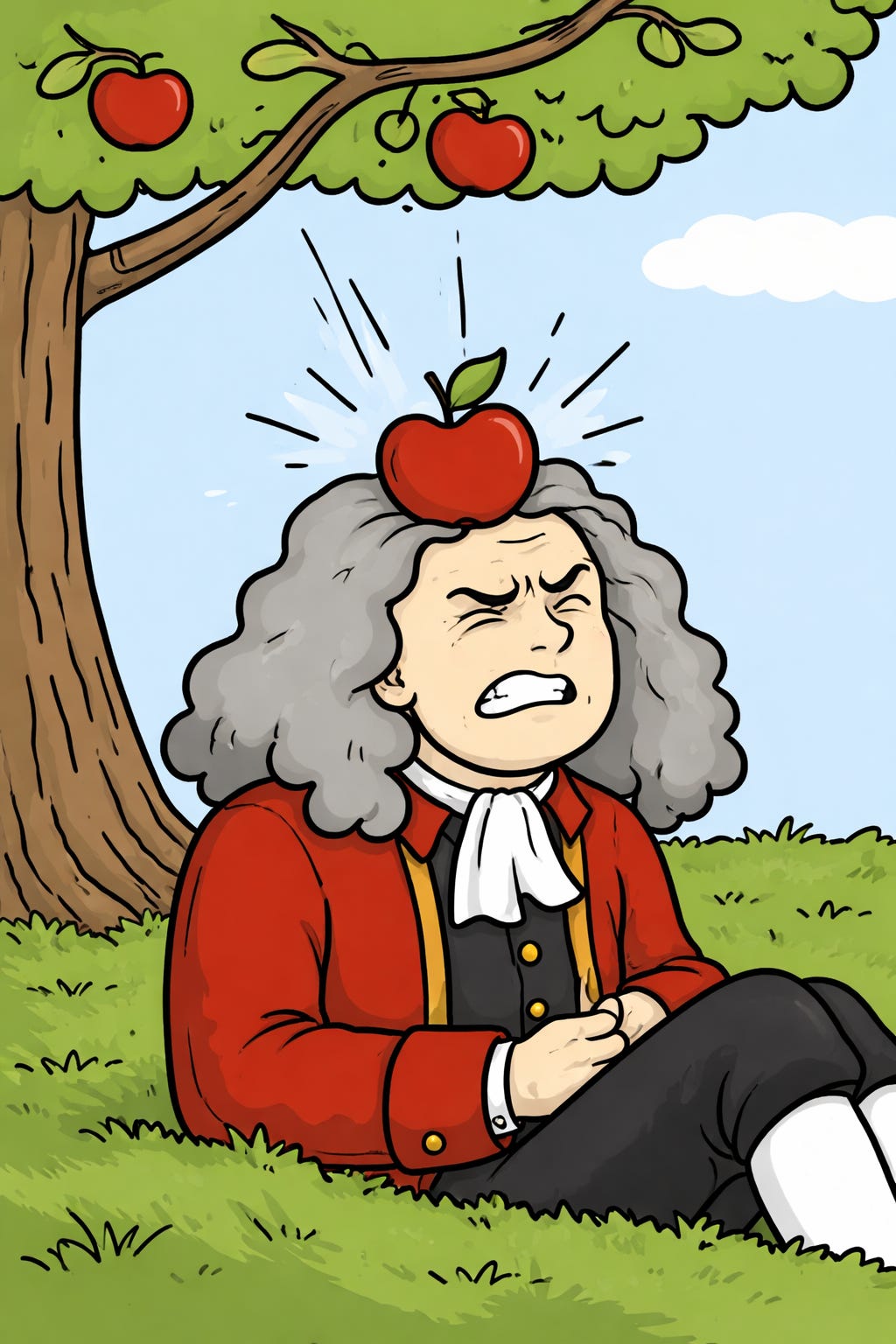
An apple a day keeps the doctor (and the Moon) in freefall!
- Sir Isaac Newton (after a particular hard hit to the head)
Gravity is one of the most fundamental yet mysterious concepts in the universe. Depending on your background, it can be viewed as an invisible tug-of-war, a mathematical law, or the very shape of time and space itself.
Below, I’ll break down the concept of gravity in six levels of complexity.
1. The Kid
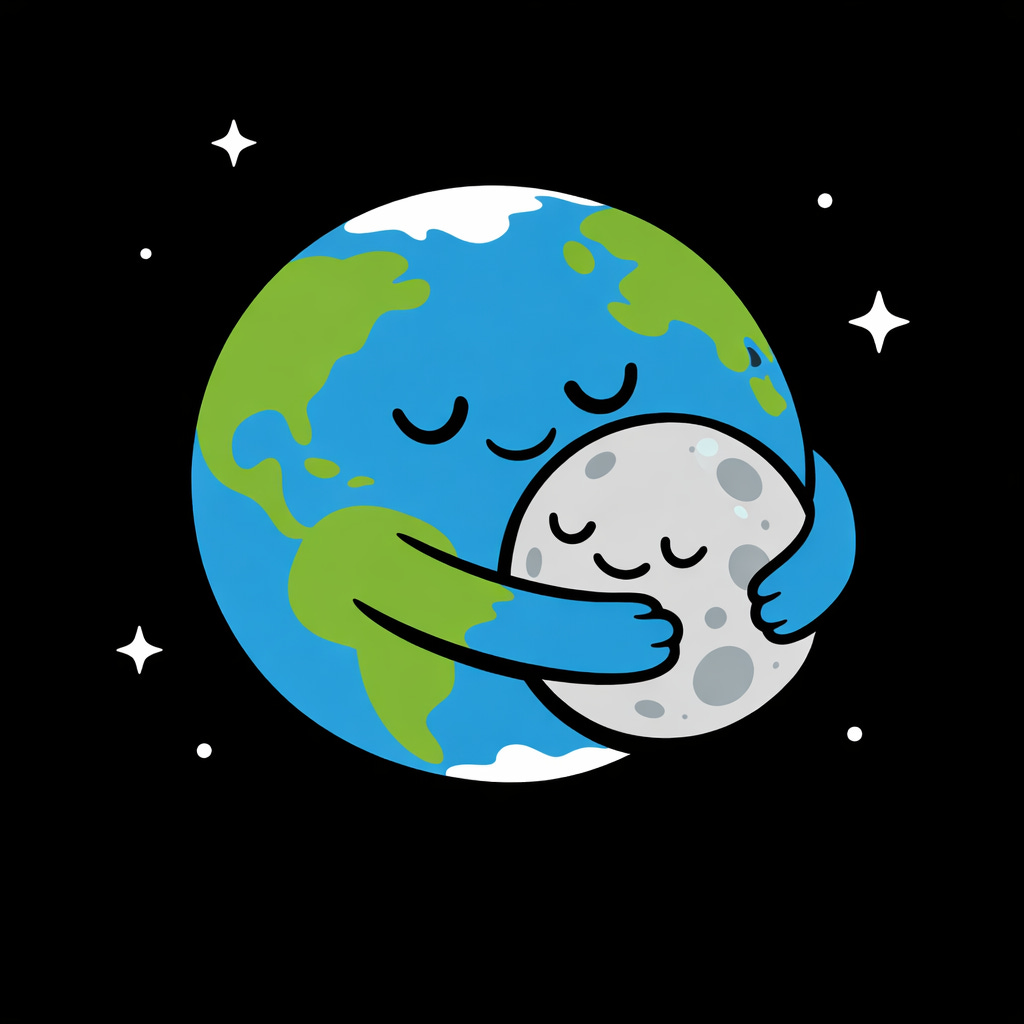
Gravity is like an invisible friend that lives in everything and loves to hug. Because the Earth is so big, its hug is very strong. It’s the reason that when you jump up, you always come back down. Without gravity, you would float away into the sky like a balloon. It’s also the "glue" that keeps the Moon close to the Earth so it doesn't get lost in the dark of space.
2. The High-Schooler
Gravity is a force of attraction between any two objects that have mass. Isaac Newton figured out that the strength of this force depends on two things:
Mass: More mass = more pull.
Distance: Further apart = weaker pull.
This is why you feel the Earth’s gravity but not the gravity of your backpack or Venus. The mathematical formulation of this insight is Newton’s Law of Universal Gravitation:
Here, G is the gravitational constant (6.674 x 10⁻¹¹ Nm²/kg²).
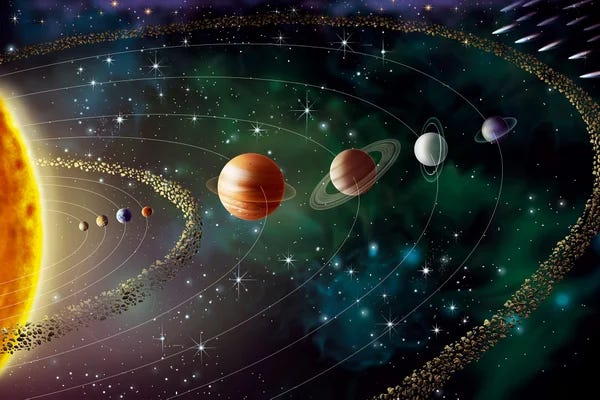
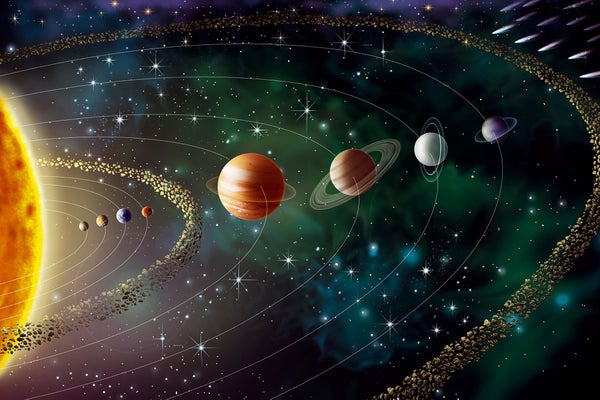
It’s what keeps the planets in orbit around the Sun, following paths dictated by the balance between their forward motion and the Sun’s constant tug.
3. The Undergraduate
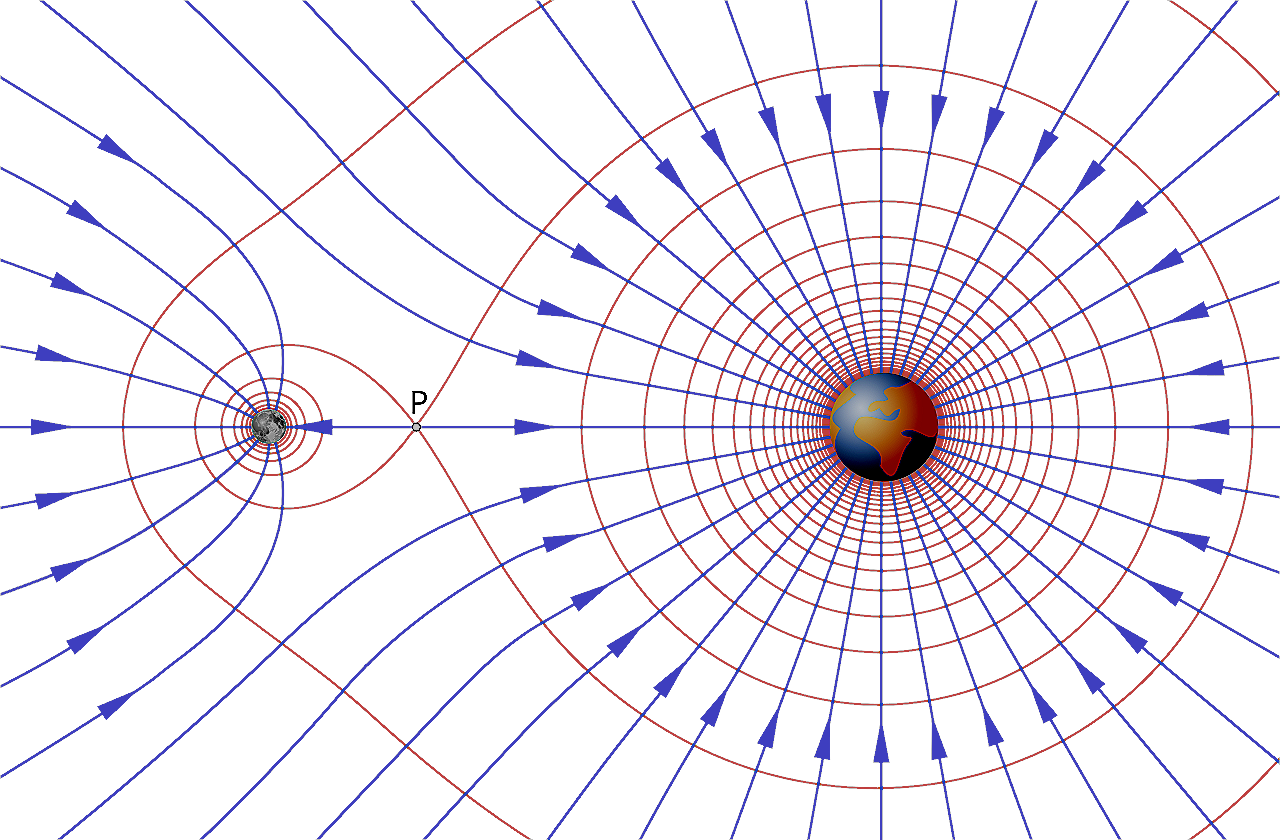
At this level, we move from “pulling” to the Gravitational Field, a continuous scalar potential field (ϕ). Instead of just calculating the force between two points, we look at how a mass (like a planet) creates a “hill” or “valley” in the energy of the space around it.
We define the gravitational field strength as the negative gradient of this potential:
This means gravity is a vector field where every point in space has a specific magnitude and direction of acceleration. By using the Poisson equation,
we can relate the potential directly to the density (ρ) of the matter present.
We also dive deep into the Equivalence Principle:
inertial mass (F = ma, representing resistance to acceleration) and gravitational mass (F = mg, representing response to gravity) are experimentally identical.
This symmetry is a massive hint that gravity isn’t just a force but also an inherent property of the space where the mass resides, leading us directly to the doorstep of General Relativity (GR).
4. The Graduate
Forget force. In GR, gravity defines the geometry of the universe. Albert Einstein realized that mass and energy tell spacetime how to curve, and curved spacetime tells matter how to move.
Imagine placing a bowling ball on a trampoline; it creates a dip. If you roll a marble nearby, it falls toward the ball, not because of a mysterious rope, but because the floor it’s walking on is curved. This is gravity!
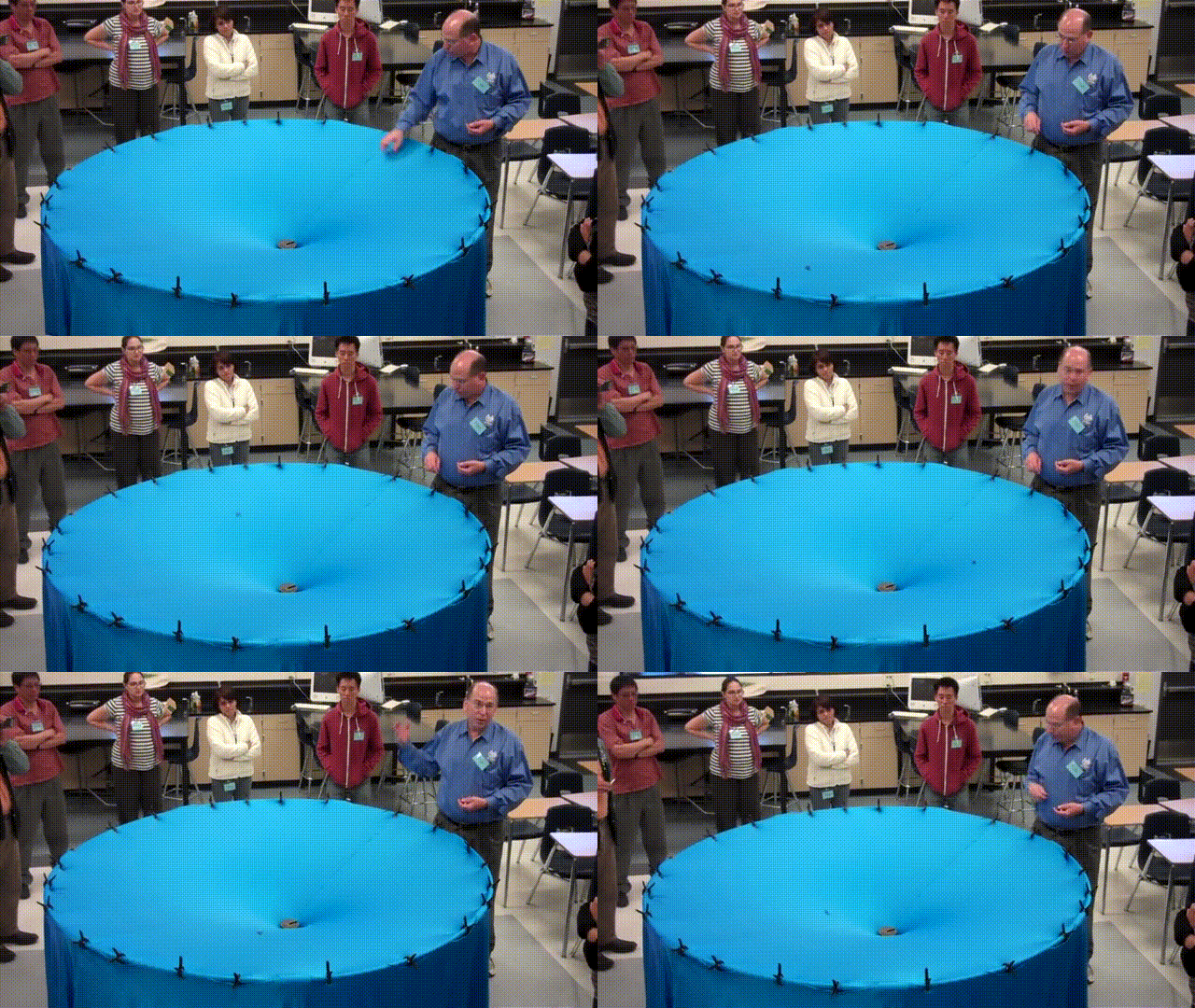
This is encoded in the Einstein Field Equations:
LHS represents the geometry of spacetime, while RHS represents the energy and momentum content of the system.
Gμν (Einstein Tensor): This represents the curvature of space-time. It encapsulates how space is warped and stretched by whatever is inside it.
Λ (Cosmological Constant): Originally introduced by Einstein to allow for a static universe, it is now associated with Dark Energy. It represents the energy density of empty space and explains why the expansion of the universe is accelerating.
gμν (Metric Tensor): This is the fundamental object that defines distance. It tells you how to measure the interval between two points in a four-dimensional world (3D space + 1D time).
Tμν (Stress-Energy Tensor): This represents the distribution of matter, energy, and momentum. It’s the source of the gravity. If you put a planet, a star, or a beam of light somewhere, it goes into this tensor.
8πG/c4 (Einstein’s Constant): This is the coupling constant that scales the relationship between matter and geometry. c = 3 x 10⁸ m/s, is the speed of light. Since c4 is massive, the value of this constant is extremely small. This explains why space-time is so “stiff”: you need a massive amount of energy to warp it significantly.
The equation is a bridge between the physical objects we can touch (Tμν) and the invisible fabric of the universe (Gμν).
5. The PhD
The challenge now is that GR (the physics of the very large) and Quantum Mechanics (the physics of the very small) don’t get along. At the Planck scale (10⁻³⁵ meters), the smooth “fabric” of spacetime should break down into quantum fluctuations.
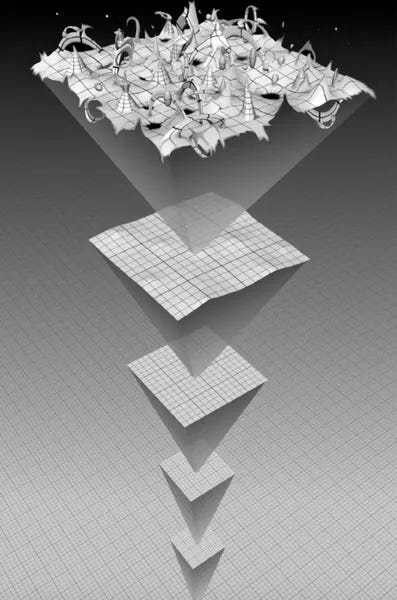
So researchers explore theories like String Theory, where gravity is mediated by a massless particle called a graviton, or Loop Quantum Gravity, which suggests that space itself is made of discrete loops woven together. We are looking for a way to quantize the gravitational field to understand what happens inside a black hole or at the very first microsecond of the Big Bang.
6. The Nobel Laureate
At the frontier of theoretical physics, some argue that gravity might not be a “fundamental” force at all, but an emergent phenomenon. An example of an emergent phenomenon is temperature, which emerges from the motion of atoms.
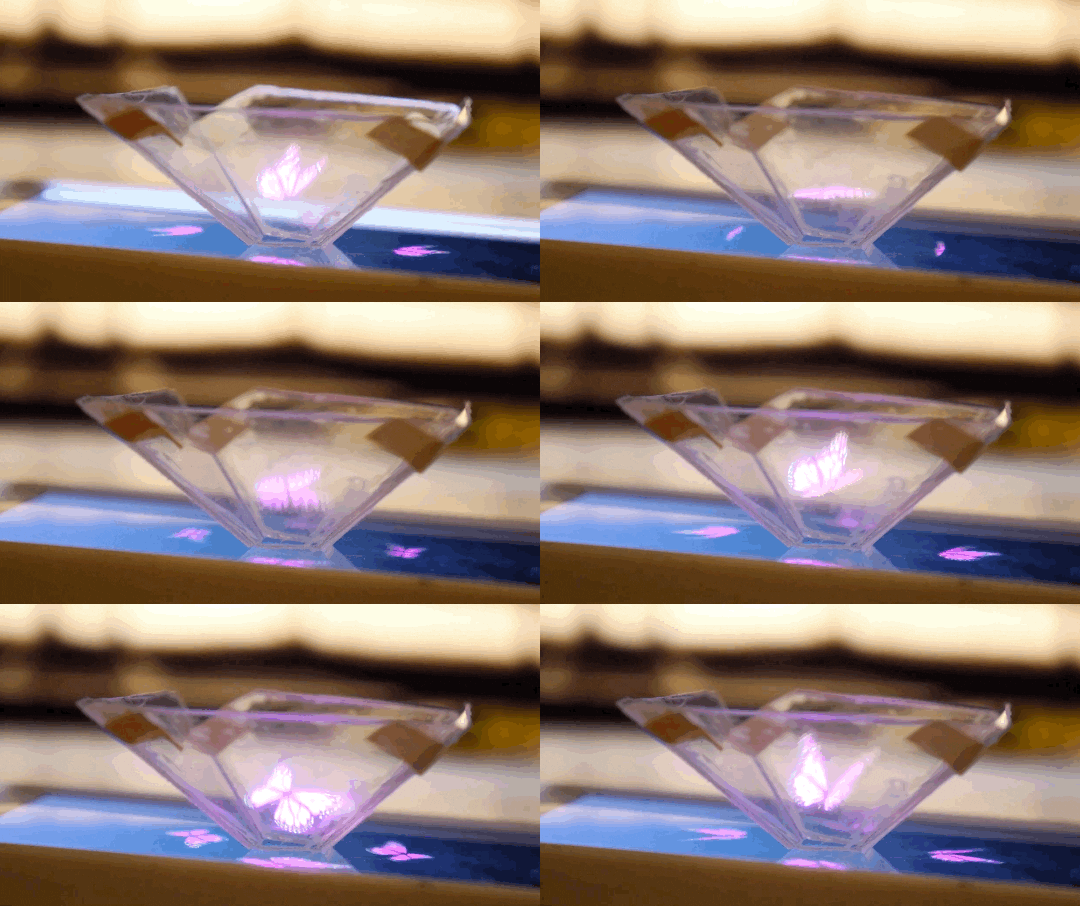
Using the Holographic Principle, we investigate if gravity in a 4D volume is actually just a projection of information encoded on a lower-dimensional boundary. We look at Entanglement Entropy to see if the geometry of spacetime is actually stitched together by quantum entanglement. In this view, gravity is the macroscopic manifestation of complex quantum information processing.

Gravity is the thread that weaves the tapestry of existence. Whether a fundamental force or an emergent illusion, gravity shows that a falling apple and a collision of two black holes are but different verses of the same cosmic poem.
If you liked these bite-sized explorations of deep physics, you’ll love what’s coming next. I will be writing more short, intuitive guides to fundamental ideas like this in the coming weeks.
Your support keeps me going.

Don’t forget to subscribe!
Thank you!!!




This is fantastic!!!
This is a thoughtful way to scaffold understanding, especially the emphasis on gravity changing how processes remain connected across scales rather than acting as a force in the usual sense.
One thing that resonates strongly with my own work is that each “level” here reads less like a deeper dynamical explanation and more like a different admissible regime. What changes from level to level isn’t just how gravity is described, but the conditions under which irreversible change can still occur coherently.
In a recent paper, I frame light and gravity as complementary constraints rather than competing mechanisms: light limiting synchronization across space, and gravity limiting the persistence of structure across scale (“Dual Constraints on Physical Structure: Light as Synchronization Limit, Gravity as Persistence Limit,” Zenodo, 2026).
https://zenodo.org/records/18419495
Seen this way, the progression through levels isn’t about adding new dynamics—it’s about recognizing which constraints dominate and what kinds of processes are still admissible in each regime. That helps explain why gravity feels so different depending on context, without requiring it to “mean” different things at each level.