

How will Disclosure Day change us?
Steven Spielberg’s upcoming film forces us to think how the reality would rewire our science, systems, and psychology.

Welcome to Bohring. Here, we look at the universe, life, and science education through a physicist’s lens. If you’re new here, consider joining our community of curious minds:
Steven Spielberg’s Disclosure Day hits theaters on June 12. It’s his fourth film exploring the encounter between humans and extraterrestrial life. Anticipation is sky-high, especially since John Williams is still scoring films at 94. Adding to the hype, the trailer asks a haunting question:
“If someone showed you, proved it to you, would that frighten you?”
It’s a classic Hollywood setup—a cybersecurity whistleblower leaks definitive proof of an advanced extraterrestrial presence, and the world is forced to confront the ultimate truth.
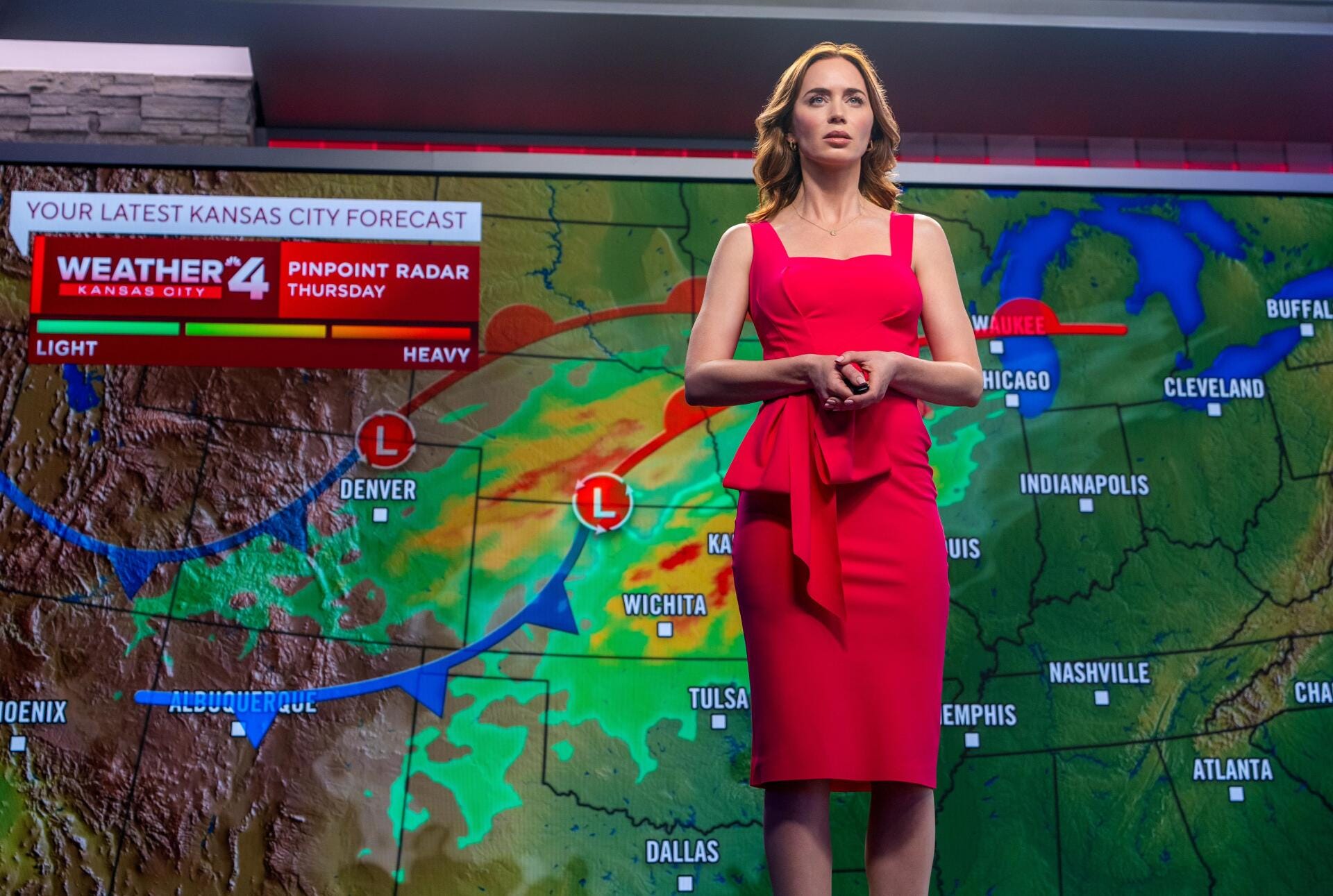
But if an actual “Disclosure Day” happened in our real world, how would it actually change us? What happens the day after we find out we’re not alone?
In the movies, we see fighter jets scrambling into the sky while crowds run screaming through downtown Manhattan. If history and human nature are any indication, the reality would look vastly different.
The immediate aftermath would likely be characterized by a quiet, surreal, collective paralysis. The world wouldn’t end with a bang; it would simply pause to look down at its phones. People would sit in parked cars listening to the radio and refresh their feeds in silence. They would look out of the window at the sky. That sky would suddenly feel much tighter, heavy with the realization that someone out there is watching us. Yet, simultaneously, it would feel infinitely deeper, knowing that we are no longer alone in this cosmic void.
Immediate Aftershocks
Once that initial stillness passes, the first major structural tremor would hit our global institutions, starting with the stock markets. Wall Street and global exchanges hate unpredictability more than anything else. A sudden influx of the ultimate cosmic variable would trigger immediate, massive volatility. Industries built on long-term terrestrial bets—fossil fuels, traditional aerospace, real estate—might see wild swings as capital frantically tries to reposition itself for an entirely unmapped future.
Yet, while the markets panic, governments would likely experience a different kind of crisis. Perhaps a quiet, desperate race for control will begin.
The threat of an ‘alien invasion’ might not be what sparks initial panic in the corridors of power. Instead, the first thing superpowers would confront is a catastrophic loss of narrative control. For centuries, the state has maintained its authority by curating baseline reality and ensuring a semblance of predictability. A massive, decentralized leak completely destroys that monopoly on information.
Anthropocentrism will die
Ironically, the very things that drive our nightly news—border disputes, resource wars, and bitter national rivalries—would instantly look incredibly parochial. Viewed against a canvas that spans light-years, the petty tribalism of human politics begins to look like two ants fighting over a leaf in the middle of a rainforest. It becomes fundamentally absurd to argue over drawing a line in the dirt when the entire planet is suddenly revealed to be a single, fragile backyard.
This realization would deal a devastating blow to our collective ego, marking the true death of anthropocentrism. For our entire evolutionary history, we have operated under the assumption that human intelligence is the absolute benchmark for reality. Overnight, we would drop from the top of the cosmic hierarchy to the bottom form of organized intelligence in the room.
Textbooks will be rewritten
But where our ego was bruised, our curiosity would catch fire. The global scientific community would experience a massive, unprecedented renaissance. Science and tech funding would see an astronomical boost as resources shift overnight toward astrobiology, quantum telemetry, and atmospheric physics. Every university, laboratory, and independent researcher on Earth would scramble to analyze the leaked data. Everyone would want to publish the first definitive papers on the mechanics of the anomalies.
Religions will adapt
Would this sudden shift cause global religions to collapse? Surprisingly, probably not. Human faith is remarkably resilient and adaptive. While some literalist or fundamentalist interpretations might face severe crises, major theological frameworks have spent centuries absorbing massive paradigm shifts—from Copernicus proving we aren’t the center of the solar system to Darwin rewriting our biological history. Many theologians have already spent decades quietly writing papers on how their doctrines encompass life beyond Earth. For billions, faith would simply widen its scope to fit the new architecture of creation.
Bohring is entirely reader-supported. The deep-dive physics series and philosophical essays are made possible by the “Deep Divers”—the paid community members who value independent science communication.
If you’re currently on the free tier, consider upgrading to a paid subscription to unlock exclusive deep dives, archives, and chat:
Physics won’t change (mostly)
The same adaptability applies to our understanding of the universe itself. Would physics change? The short answer is no. Gravity will still pull, and light will still travel at its stubborn speed limit. However, decades of academic consensus would instantly evaporate. The leaked data would force theoretical physicists to abandon decades of dead-end hypotheses and pivot toward the actual, observed mechanics of non-human technology. This won’t change physics but will just break our limitations within it.
Rent will still be due
But what about Tuesday morning? What about your daily life?
This is the great paradox of a real Disclosure Day. The psychological backdrop of every action you take would be permanently rewired, but the immediate demands of being alive would remain stubbornly the same. People would still have to pay rent, buy groceries, pack lunches, and go to work. You might sit in a morning staff meeting, staring at a spreadsheet, acutely aware that an advanced intelligence is operating within our biosphere—but you still have to finish the report by 5:00 PM. Humans have an incredible, almost funny ability to normalize the miraculous just to get through the day.
A real Disclosure Day will hold up a mirror to our own insignificance. It would leave us living in a strange, dual reality—one eye fixed on the cosmic vastness, the other on the mundane routines of tomorrow morning. We would be smaller than we ever imagined, yet somehow more connected than we ever cared to admit. The cosmic narrative will no longer be ours to control, but our own small stories will still belong to us. Our perception of the universe would change forever—but Wednesday morning would arrive right on time.
Watch the movie trailer here:
And let me know how excited you are for this film?
Thank you for reading. If my reflections on life or physics resonated with you today and you’d like to support my independent writing without committing to a monthly subscription, you can drop a small tip in my digital jar. It keeps me motivated.




Your article states "For billions, faith would simply widen its scope to fit the new architecture of creation." Some of us hold a biblical supernatural view that hasn't been forced into the shadows by mainstream biblical narratives. As a Christian, my thoughts are " It's about time! Where have you been for centuries?" A realistic and deeply studied look at biblical and historical sources shines light into the shadows and should prepare us for what we were warned about over 2000 years ago. A shout out to the late Dr. Michael Heiser for having the guts to step beyond political correctness and theological restraint to point out what so many people of faith have been missing all along. So I'll stare at the sky, sip my cup of tea and patiently wait for the "Day of Disclosure" while chuckling to myself before exclaiming. "There you are, what took you so long!"
I used the think that humans were well adjusted and could handle it well, but after meeting more of the human race… the ones that can't handle it … we don't really need them anyway.