

Quantum Internet, explained simply.
How scientists are using the bizarre laws of quantum physics to build a completely unhackable network.

Welcome to Bohring. Here, we look at the universe, life, and science education through a physicist’s lens. If you’re new here, consider joining our community of curious minds:
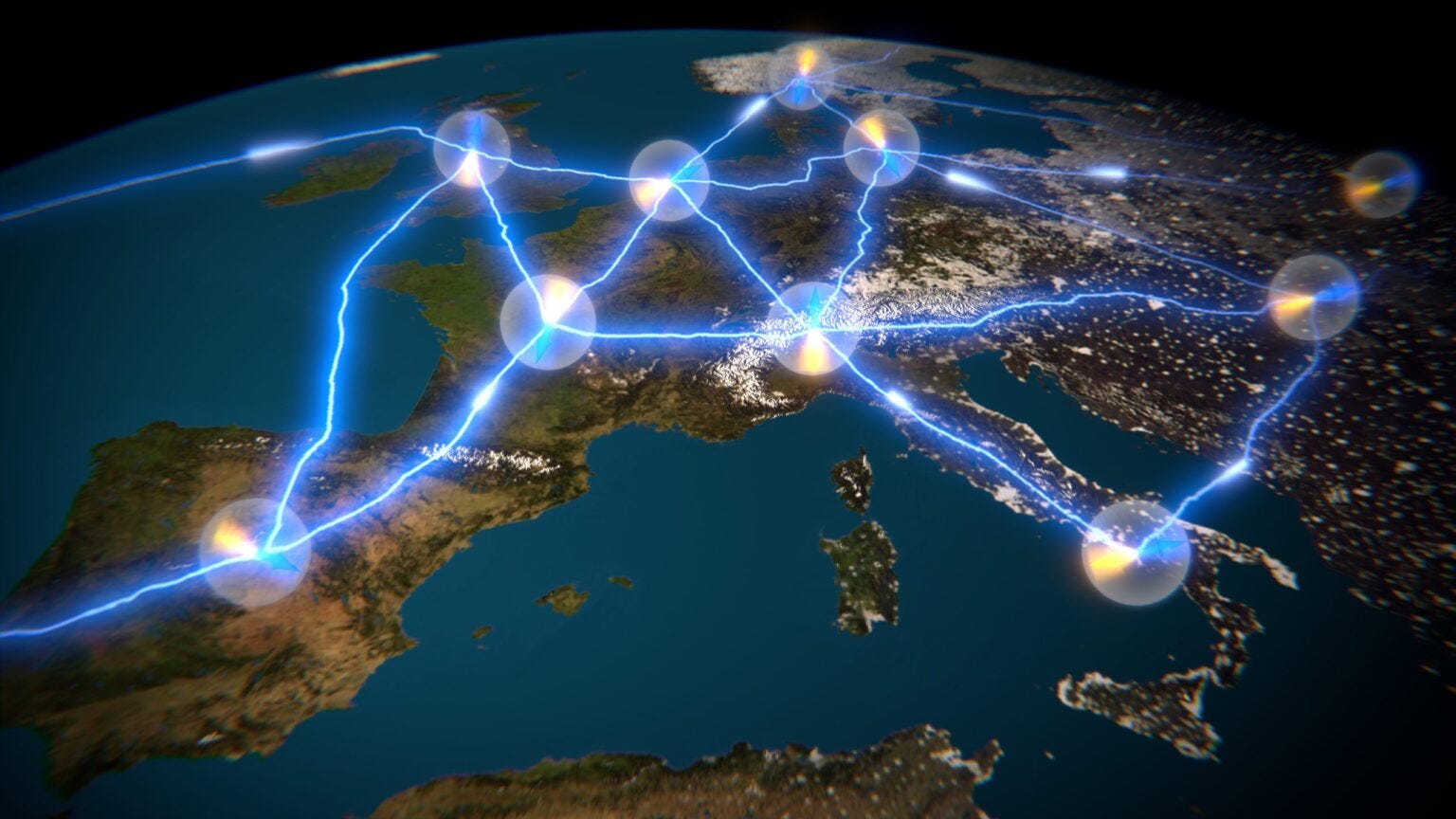
You have probably heard the phrase “quantum internet” thrown around lately. It sounds like science fiction, or at least like something only people with physics PhDs should care about. But it is a real technology being built right now.
Bits and the internet we know
Think about how you are reading this article. The text traveled from a server to your screen. Under the hood, that data moved as electricity through copper wires, or pulses of light through fiber-optic cables.
No matter how complex a webpage looks, it is made of bits. A bit is the basic unit of information. It can only be one of two things: a 0 or a 1. It works like a standard light switch. It is either off or on. By lining up millions of these switches, we can encode text, pictures, and videos.
If someone intercepts those light pulses while they travel through the cable, they can make a copy of the 0s and 1s. They get your data, and you never even notice they were there. This is why we need encryption, and it is where our current internet starts to hit a wall.
Qubit and Superposition
The quantum internet introduces a new kind of information unit called the quantum bit, or qubit, alongside the ordinary bit used in today’s internet.
While ordinary bits are usually stored using electrical signals inside electronic devices, a qubit can be encoded into a tiny quantum system, like a single photon (a particle of light). Because it follows the rules of quantum physics, a qubit does not have to choose between being a 0 or a 1. It can exist in a state of both at the same time.
This is called superposition. Don’t let the name intimidate you. Think of a coin sitting on a table. It is either heads (1) or tails (0). That is a normal bit. Now, imagine you spin that coin on the table. Is it heads or tails? It is a blur of both at the same time. That is a qubit in superposition.
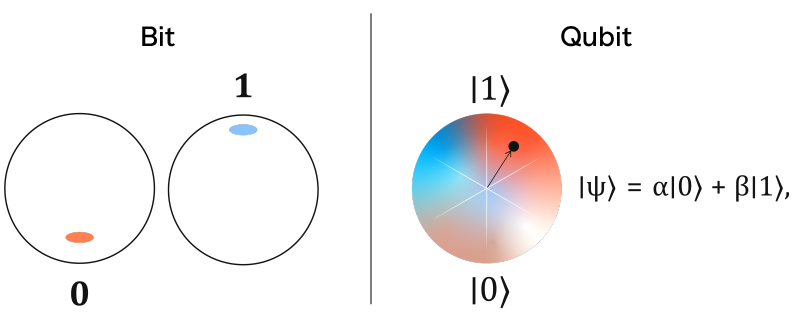
The magic happens when you stop the coin. The moment you slap your hand down on it, the spin ends. It instantly forces the coin to become a solid head or tail. In physics, we say that measuring a qubit forces it to choose a definite state.
No-Cloning Theorem
This brings us to the first major feature of the quantum internet. We want to realize a form of security that can reveal eavesdropping attempts through the laws of quantum physics.
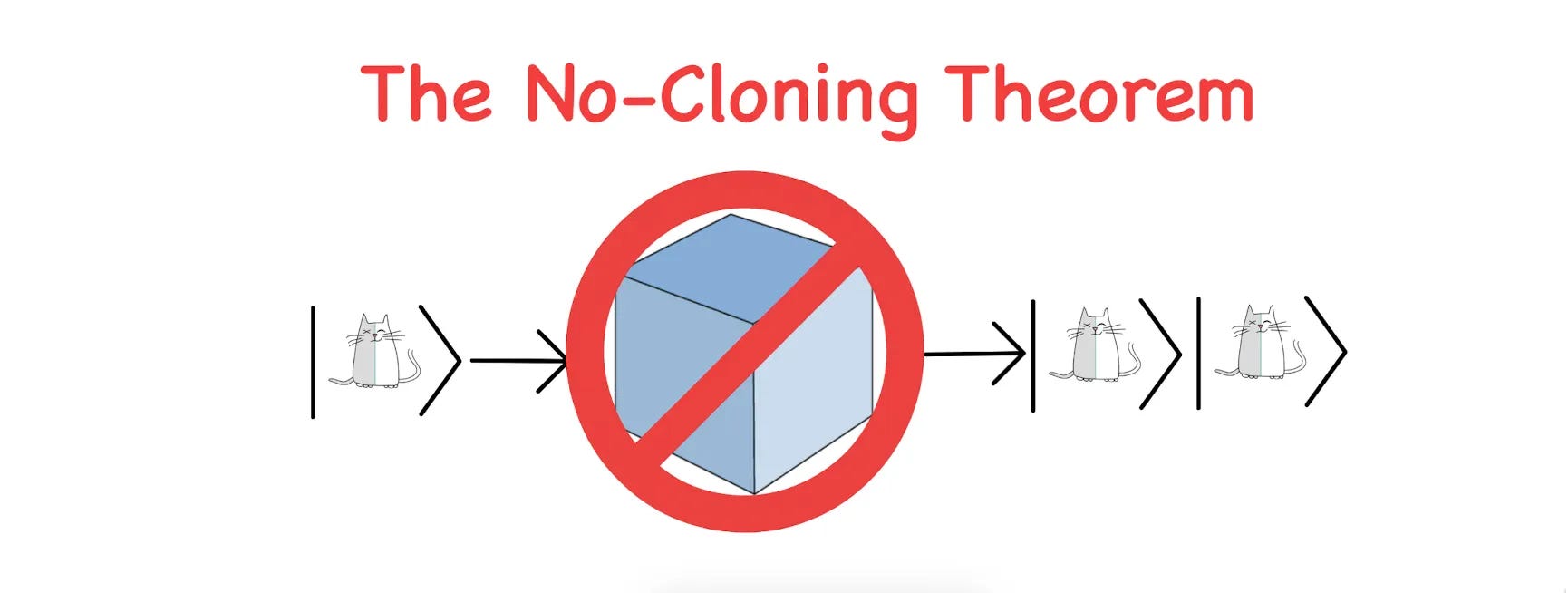
In the normal digital world, copying data is easy. If I send you a file, I still keep the original. But in the quantum world, there is a strict rule called the No-Cloning Theorem.
The no-cloning theorem states that it is impossible to create an independent and identical copy of an arbitrary unknown quantum state.
Remember the spinning coin. If a hacker tries to spy on a quantum transmission to see what the data is, they are forced to ‘look’ at it. The moment they look, they stop the coin from spinning. The superposition collapses. This changes the data itself, due to which the person receiving the message will immediately see errors. They will know someone was listening, and the hacked data becomes completely useless to the spy. You cannot steal quantum data silently.
Quantum Entanglement
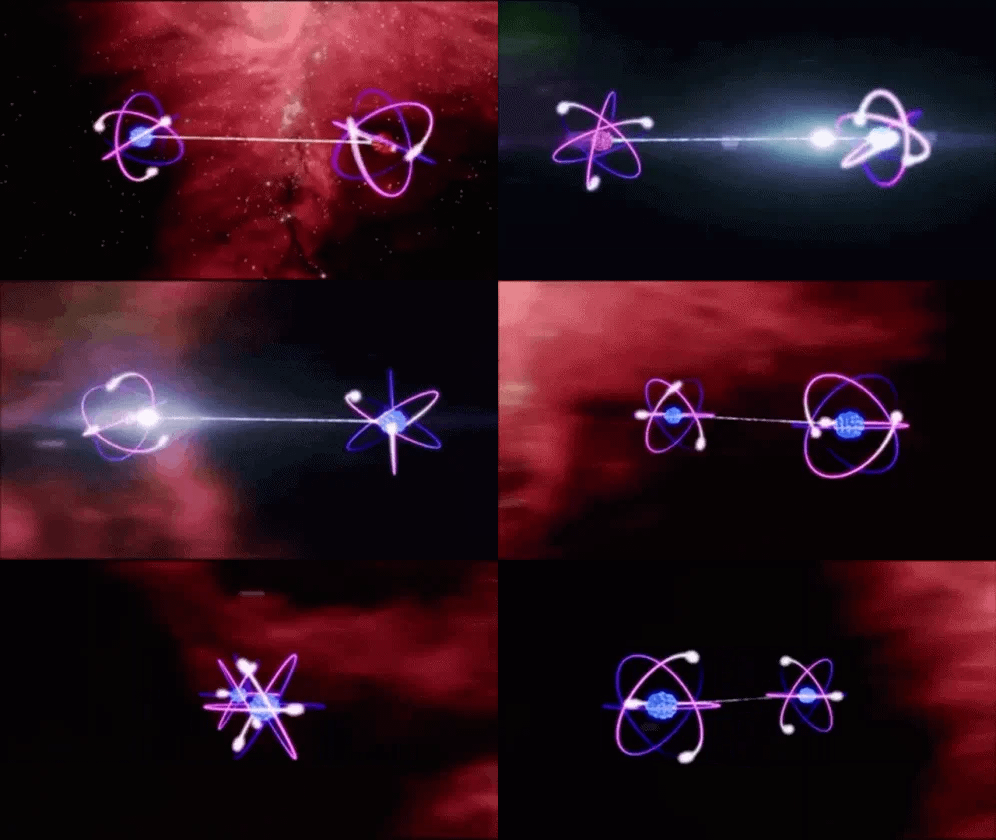
So far, we have talked about sending a single qubit. But how do we connect two distant points? We use a strange phenomenon called entanglement.
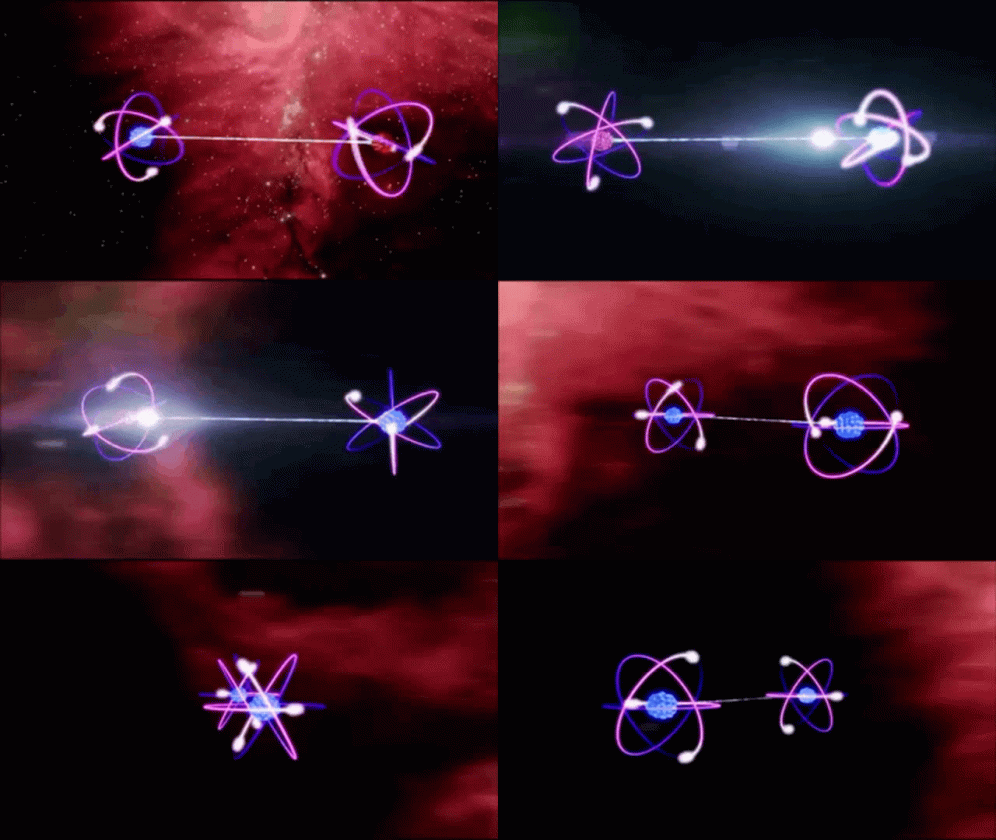
Scientists can take two photons and link them together in a special way. Once they are linked, they become a correlated pair. Entanglement acts like a shared quantum resource between distant locations. Instead of sending a fragile quantum state directly through the entire network, two distant points can share entangled particles ahead of time and use that connection later to transfer quantum information.
So imagine creating an entangled pair of photons with opposite spins. If you send one photon to New York and the other to London, they stay connected, no matter the distance.
If you measure the New York photon to be in the spin-up state |↑⟩, you will instantly know that the London photon must be in the spin-down state |↓⟩. Their measurement outcomes remain correlated instantly across distance, even though no usable information travels faster than light. Albert Einstein famously called this “spooky action at a distance” because it seemed impossible. But it is real.
Quantum Teleportation
I dedicated a separate article to this topic a few years ago:

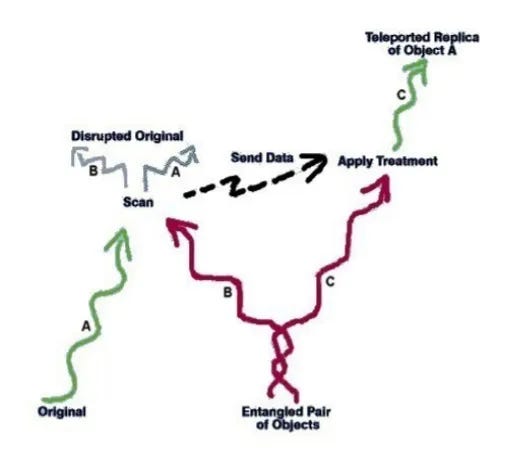
We do not send quantum data by pushing it through a wire (the old-fashioned way). Instead, we use entanglement to achieve quantum teleportation. No, this does not mean moving physical objects like in Star Trek. It means moving the state of a particle.
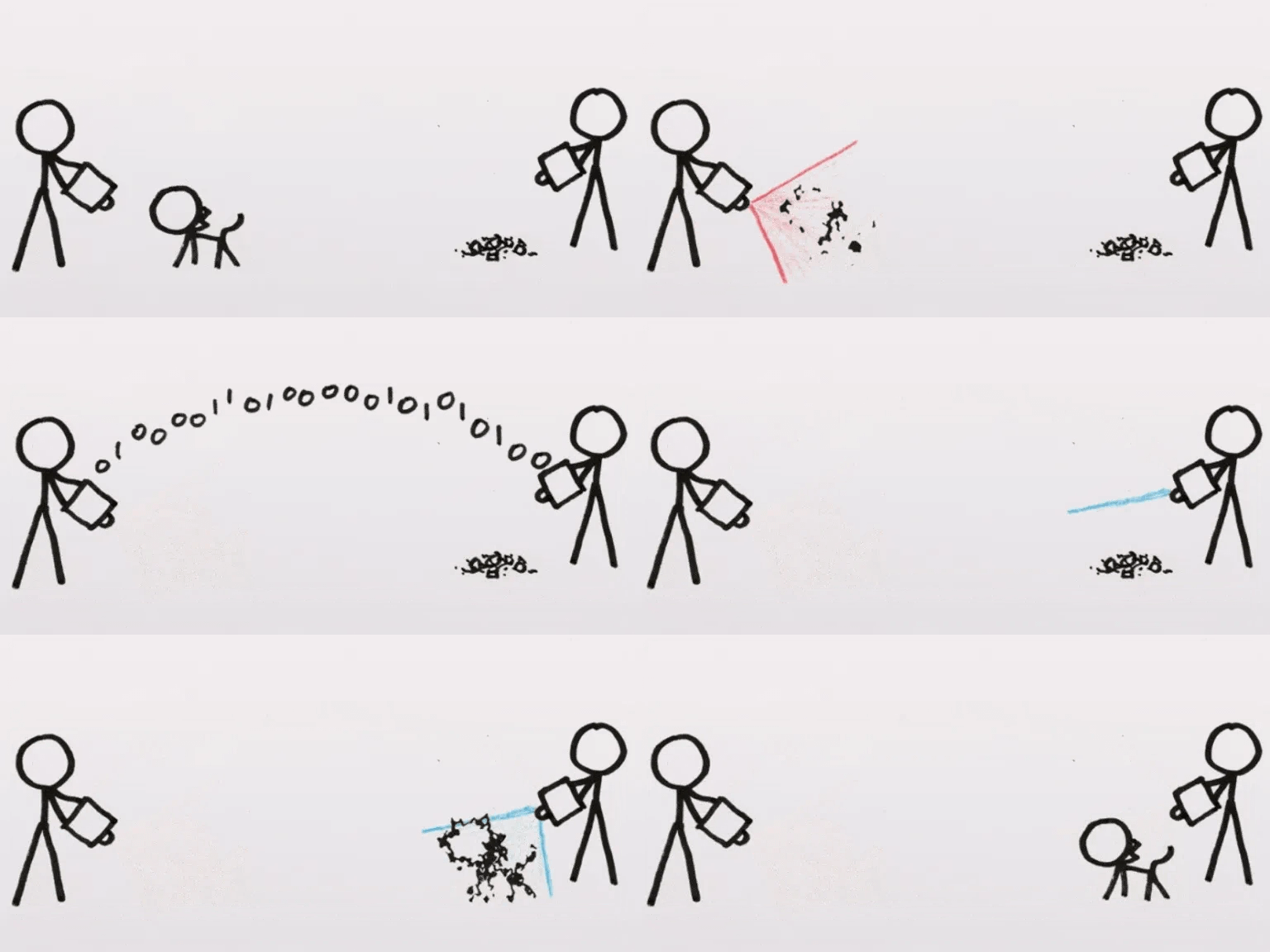
If I have a qubit in New York and I want to send its exact state to you in London, we use our pair of entangled photons. I perform a measurement on my end with my photon and the data qubit. This action destroys my original qubit but sends a flash of traditional data to you. That ordinary data still cannot travel faster than light, so quantum teleportation does not break Einstein’s theory of relativity. Using that data and your half of the entangled pair, your photon transforms into an exact replica of my original qubit.
The quantum state is destroyed in New York and reconstructed in London.
Bohring is entirely reader-supported. The deep-dive physics series and philosophical essays are made possible by the “Deep Divers”—the paid community members who value independent science communication.
If you’re currently on the free tier, consider upgrading to a paid subscription to unlock exclusive deep dives, archives, and chat:
Why don’t we have it yet?
If this is so great, why are we still using normal WiFi?
Because quantum states are incredibly fragile. A tiny change in temperature, a stray vibration, or light can disturb a qubit. When a qubit accidentally interacts with the outside world, it loses its quantum properties. This is called decoherence. The spinning coin hits a bump on the table and falls over before it reaches its destination.
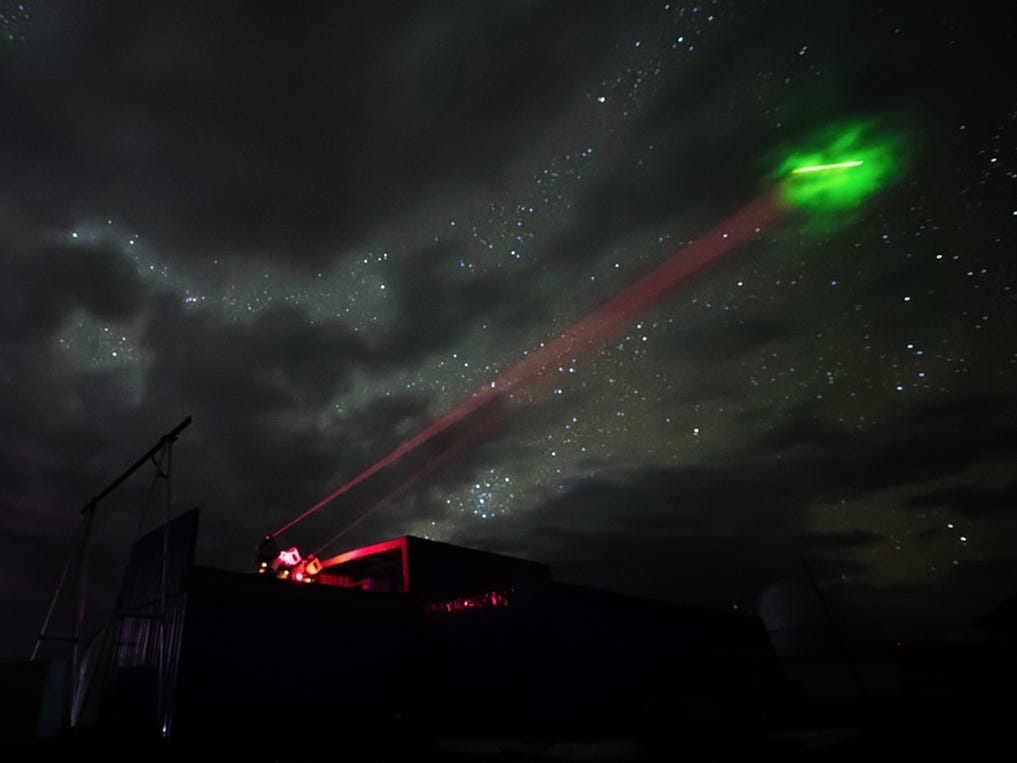
So over long distances, quantum signals degrade rapidly and become extremely difficult to preserve. The world record for the longest-distance quantum teleportation was achieved by Chinese scientists, who successfully teleported quantum information from a ground station in Tibet to the Micius satellite orbiting up to 1400 km (870 miles) above Earth.
On the normal internet, we fix this using amplifiers to boost the signal. But remember the No-Cloning Theorem: we cannot copy or boost a quantum signal without destroying it.
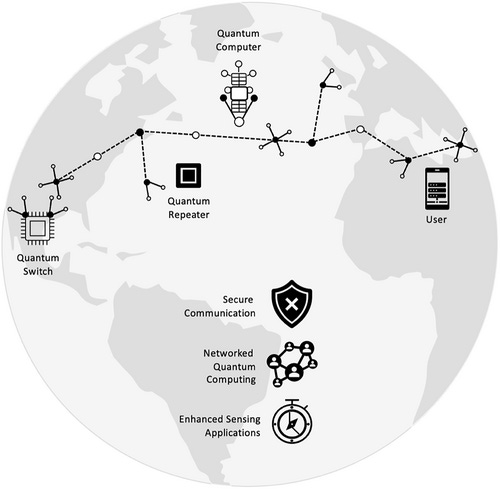
Scientists are currently building devices called quantum repeaters. These are highly advanced tools that extend fragile quantum correlations across long distances. They catch the fading quantum information, store it briefly without looking at it, and use entanglement to pass it along to the next stretch of cable.
The Big Picture
The quantum internet will not replace the current internet. You won’t use it to scroll social media or watch video streams. Normal bits do those things perfectly and cheaply.
Instead, the quantum internet will run alongside our current system. It will be used by banks to transfer money with dramatically improved security. It will allow hospitals to share sensitive medical data without fear of leaks. And it will link quantum computers together, combining their power to solve massive problems like designing new medicines or modeling global weather patterns.
It is a new infrastructure layer for the world. We are moving from a web of wires to a web of perfectly synced quantum connections.
Here are some news pieces briefing on the latest breakthroughs:
Thank you for reading. If my reflections on life or physics resonated with you today and you’d like to support my independent writing without committing to a monthly subscription, you can drop a small tip in my digital jar. It keeps me motivated.


I read every post, trying hard to understand 🤣
Thank you very much 🧡