

Quantum Chromodynamics Explained: Quarks, Gluons, and the Strong Force
A intuitive guide to color charge, confinement, asymptotic freedom, and the physics inside protons.

Article #15 in the Quantum Field Theory series
Quantum Chromodynamics is the application of quantum field theory (QFT) to strong interactions.
A reminder: I’m a student. If you like my writings, consider subscribing for free:
Quarks
By the 1950s and 60s, with the invention of bubble chambers and spark chambers, physicists had stumbled upon a chaotic zoo of hundreds of subatomic particles called hadrons. It was hard to believe that all of them could be fundamental.
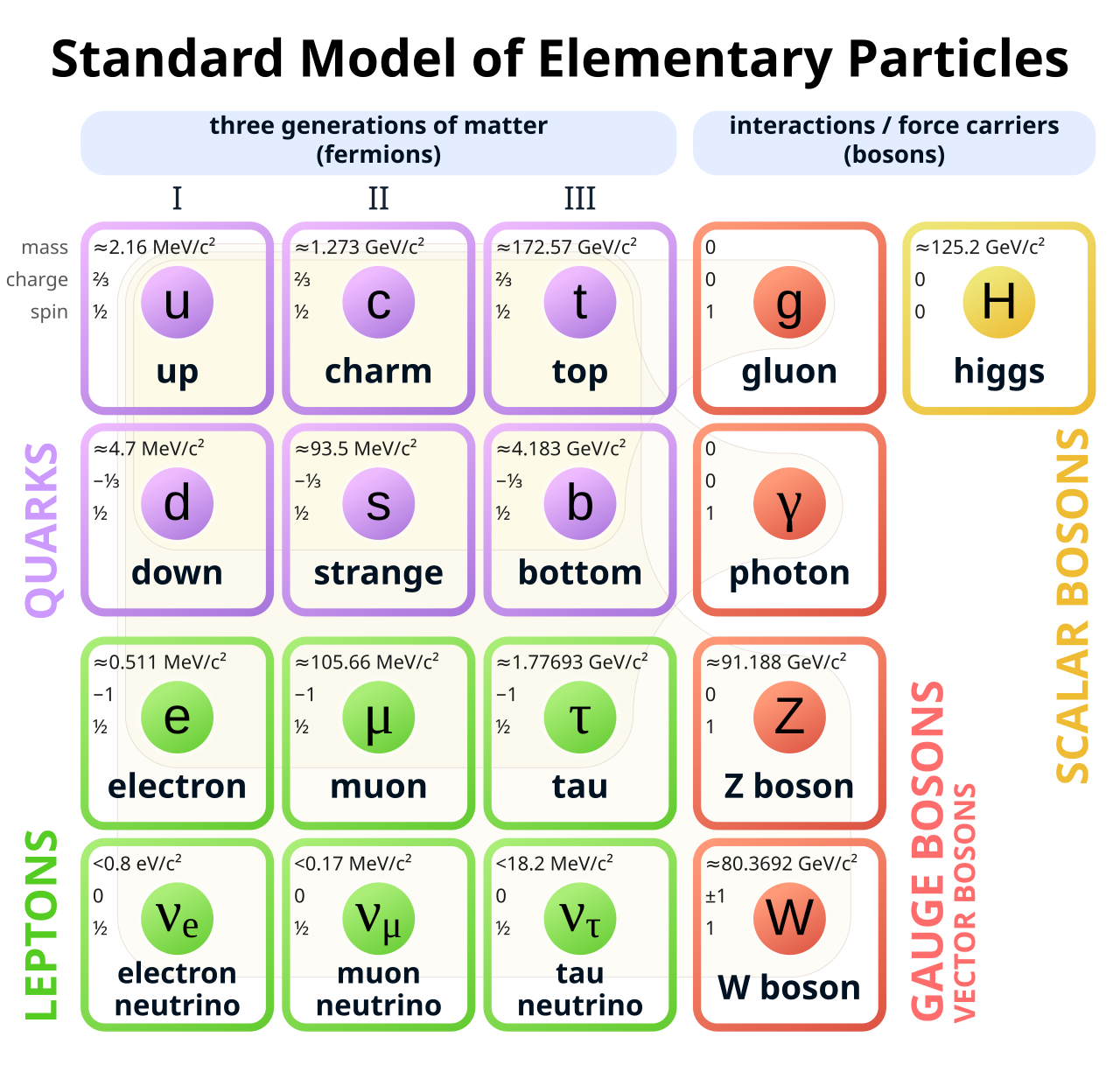
In 1963, Murray Gell-Mann and George Zweig suggested that these particles were, in fact, composite objects, composed of Quarks. Initially, only three quarks were known. Today, we know that there are six of them:
Up (u), Down (d), Charm (c), Strange (s), Top (t), and Bottom (b).
The u, c, and t quarks have an electric charge of +2/3, while d, s, and b have an electric charge of -1/3.
Quarks are fermions and hence are spin-1/2 particles.


Color charge
With the discovery of quarks, physicists faced two problems:
Like charges repel each other. How do we explain the collective existence of two u quarks inside the nucleus? We need a force that is much stronger than electromagnetism.
Fermions obey the Pauli Exclusion Principle. So no two fermions can occupy the same quantum state. Yet some of these newly discovered hadrons seemed to share identical states. To solve this contradiction, we need an additional degree of freedom: a new kind of charge that distinguishes the quarks, even when all their other properties appear identical.
This was the birth of Color Charge. It is the source of the strong nuclear force, the strongest of all four fundamental forces.
Color charge is an inherent property of quarks, just like electric charge. It arises due to a specific type of symmetry called SU(3). I will not go into the details of it, though.
There are three color charges: Red, Green, and Blue. Anti-quarks (the antimatter counterparts of quarks) have anti-colors: Anti-Red, Anti-Green, and Anti-Blue.


These color labels have nothing to do with the ordinary colors we see. They are named so because of how they behave when you mix them. Let me explain:
Color Neutrality
Unlike an electric charge, it is not possible to isolate a color charge. Quarks only combine to form color-neutral hadron states. There are only two main ways to achieve this:
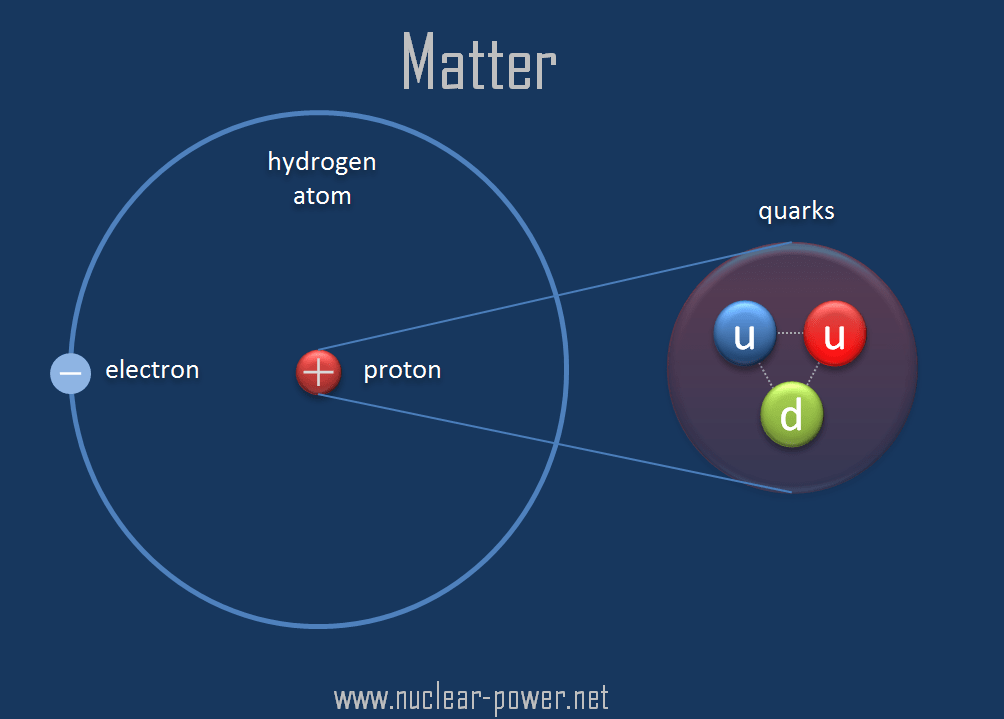
Baryons: They are formed by three quarks, each of a different color:
Red + Green + Blue = Neutral (White).
Like primary colors of light, they add up to white. This gives us protons and neutrons.Mesons: They are formed by a quark-antiquark pair, i.e., one color and its anti-color. For example:
Red + Anti-Red = Neutral.
Their superposition forms a neutral state. Kaons and pions are mesons.


Since in all combinations, all quarks have different colors, these quarks are distinct quantum states and hence allowed by the Exclusion Principle. As a result, they can exist together inside hadrons.
Every single member of that particle zoo was just a different way of mixing colors to achieve color neutrality.
Gluons
Consider a proton. It has three quarks (Red, Green, and Blue). Imagine you want the freedom to rotate those colors—to turn a Red quark into a Green one—at any point in space and time.
For you to be able to do this, nature is forced to invent a compensating field. This field accounts for those color shifts, ensuring that the overall color neutrality of the proton remains intact. The excitations of this field are the gauge bosons called Gluons. They are the messengers that carry the color information back and forth between quarks, constantly swapping their identities so fast that the total system stays stable.
So gluons are the mediators of the strong force, and their exchange is what holds the quarks together.


Gluon Self-Interaction
This is where QCD parts ways with QED.
Photons carry the electric force, but photons themselves are electrically neutral. Gluons carry the color force, but unlike photons, gluons themselves carry color charge.
Now, because gluons have color, they can interact with each other through stronge force. A gluon moving between two quarks can spontaneously emit more gluons, which in turn emit even more.
In QED, the electric field lines between an electron and a proton spread out like a spray of water from a nozzle. This is why the force gets weaker as you move away.
But in QCD, because gluons are “sticky” and attract each other, they refuse to spread out. Instead, they clump together into a tight, narrow tube of force. Imagine a rubber band that, instead of thinning out when you stretch it, actually gets thicker and more crowded with sticky energy.
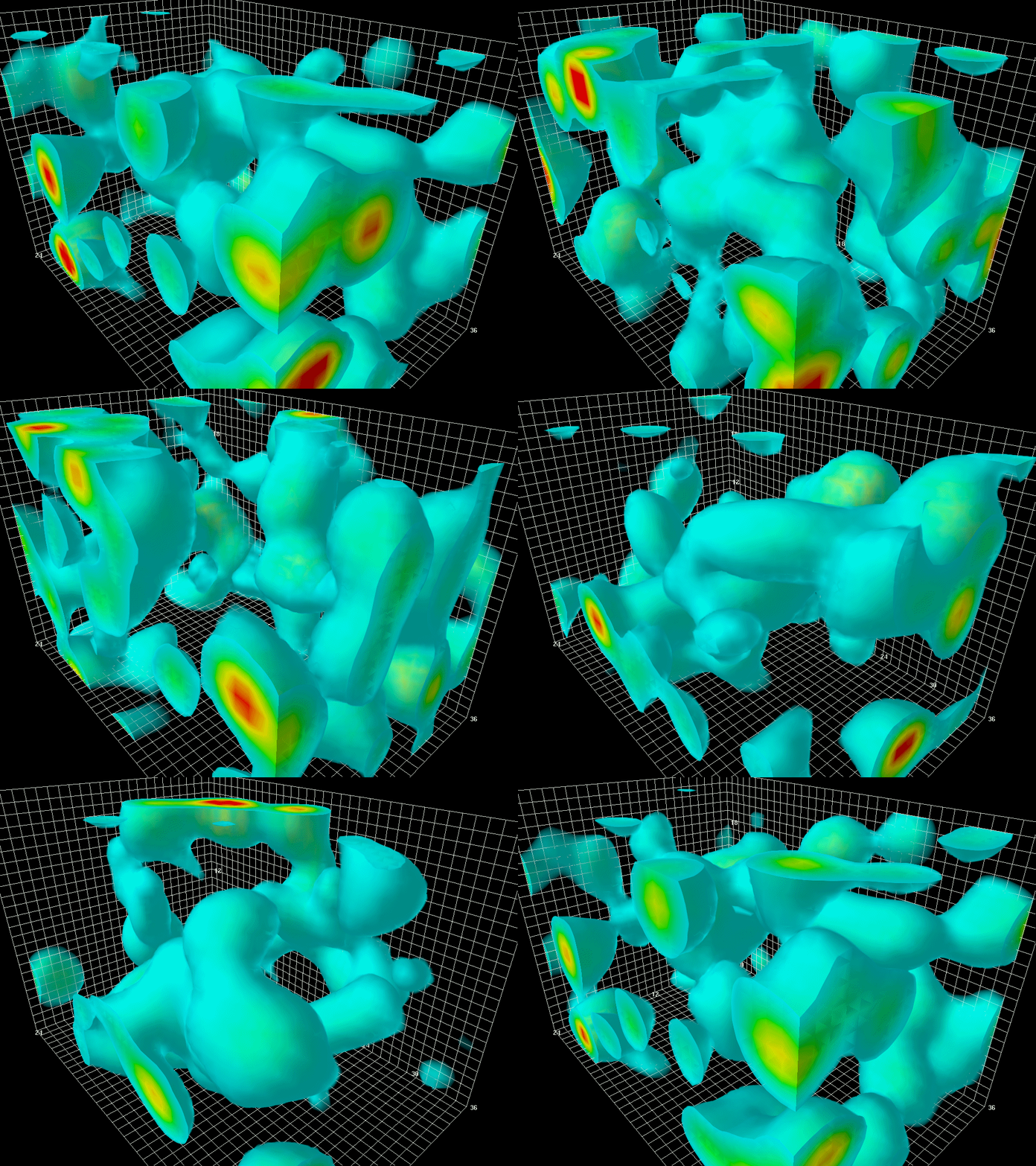
This creates a chaotic, self-reinforcing web. In the “vacuum” inside a proton, gluons are constantly grabbing onto each other, creating a prison that is virtually impossible to escape.
Asymptotic Freedom
In the late 1960s, physicists at the Stanford Linear Accelerator (SLAC) began firing high-energy electrons deep into protons, a process called Deep Inelastic Scattering.
Remember that rule of particle physics:
Higher energies correspond to smaller distances.
At such energies, physicists observed that the quarks didn’t seem to be glued to anything. They rattled around inside the proton as if they were totally free. It was a paradox: how could the strongest force in nature, the one that keeps the nucleus from exploding, suddenly seem to turn off when you get right in its face?
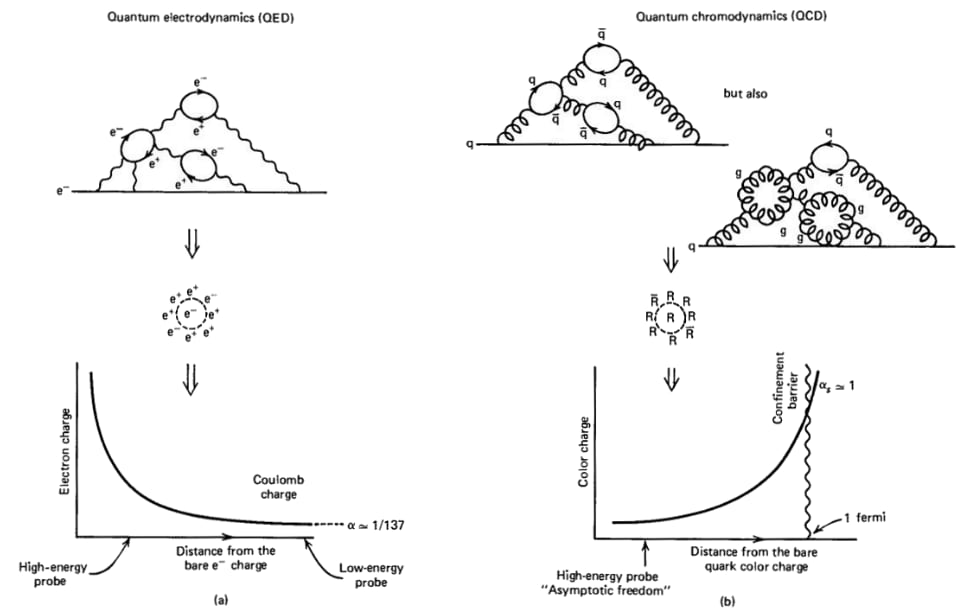
In QED, an electron is surrounded by a cloud of virtual particle-antiparticle pairs that shield its charge, making it look weaker from far away. As you get closer, you penetrate the cloud and see the naked, stronger charge.
In QCD, the opposite happens because gluons carry color. A red quark is surrounded by a cloud of virtual gluons that also carry color. But instead of shielding the charge, these gluons spread it out.
From far away, you see the smeared-out color charge of the quark plus its massive, sticky gluon cloud. The force is immense.
Up close, as you zoom in past that chaotic cloud and get right next to the naked quark, there are fewer gluons between you and the target. At almost zero distance, the stickiness has no room to operate. The force effectively vanishes.
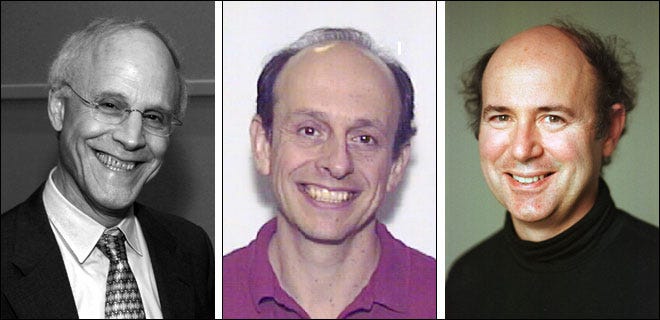
Like the QED coupling constant, the QCD coupling constant also exhibits a scaling behavior. The force gets weaker at higher energies. This phenomenon is known as Asymptotic Freedom. It was discovered in 1973 by David Gross and Frank Wilczek and independently by David Politzer. For this discovery, the trio received the 2004 Nobel Prize in Physics.
Quark Confinement
When you pull a rubber band, its tension increases. If you pull it hard enough, it snaps, and you’re left with two broken pieces.
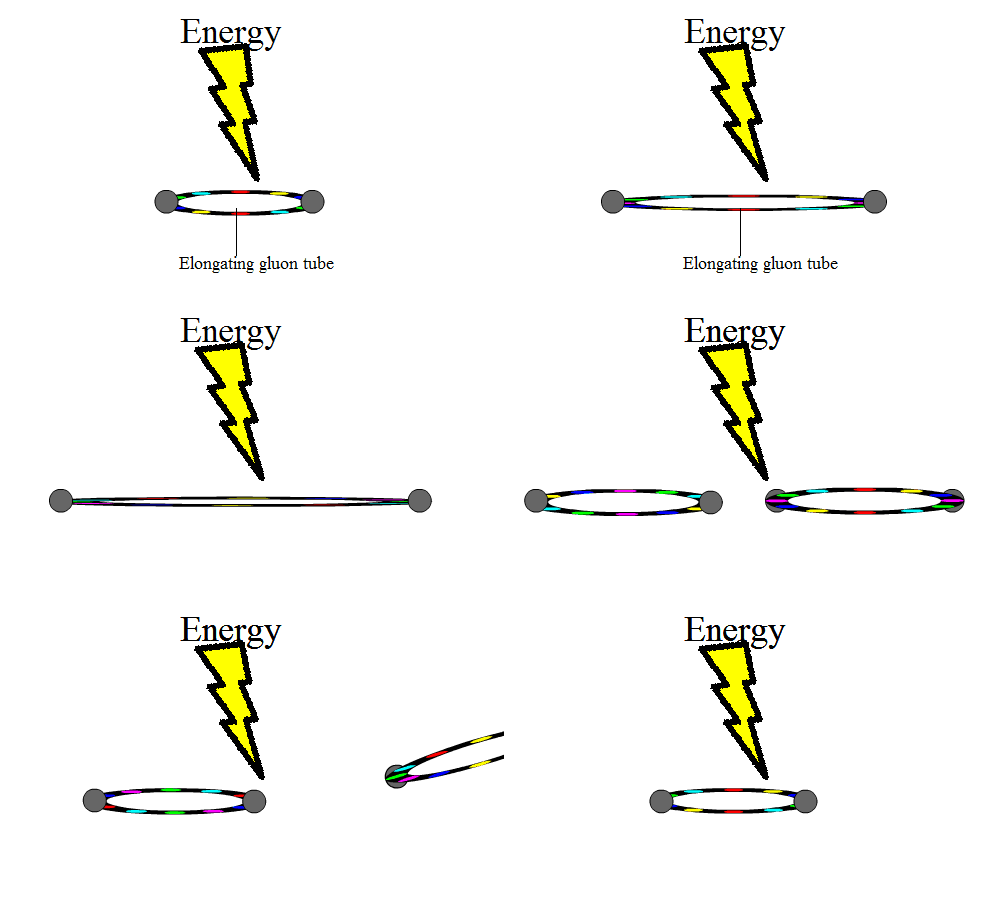
When you pull apart quarks (in a particle collider), you are pumping energy into the gluon field. So its potential energy increases. The vacuum between the quarks becomes incredibly heavy with the tension of the strong force. The gluon field between two quarks constricts into a tight, narrow cord of energy called a Flux Tube.
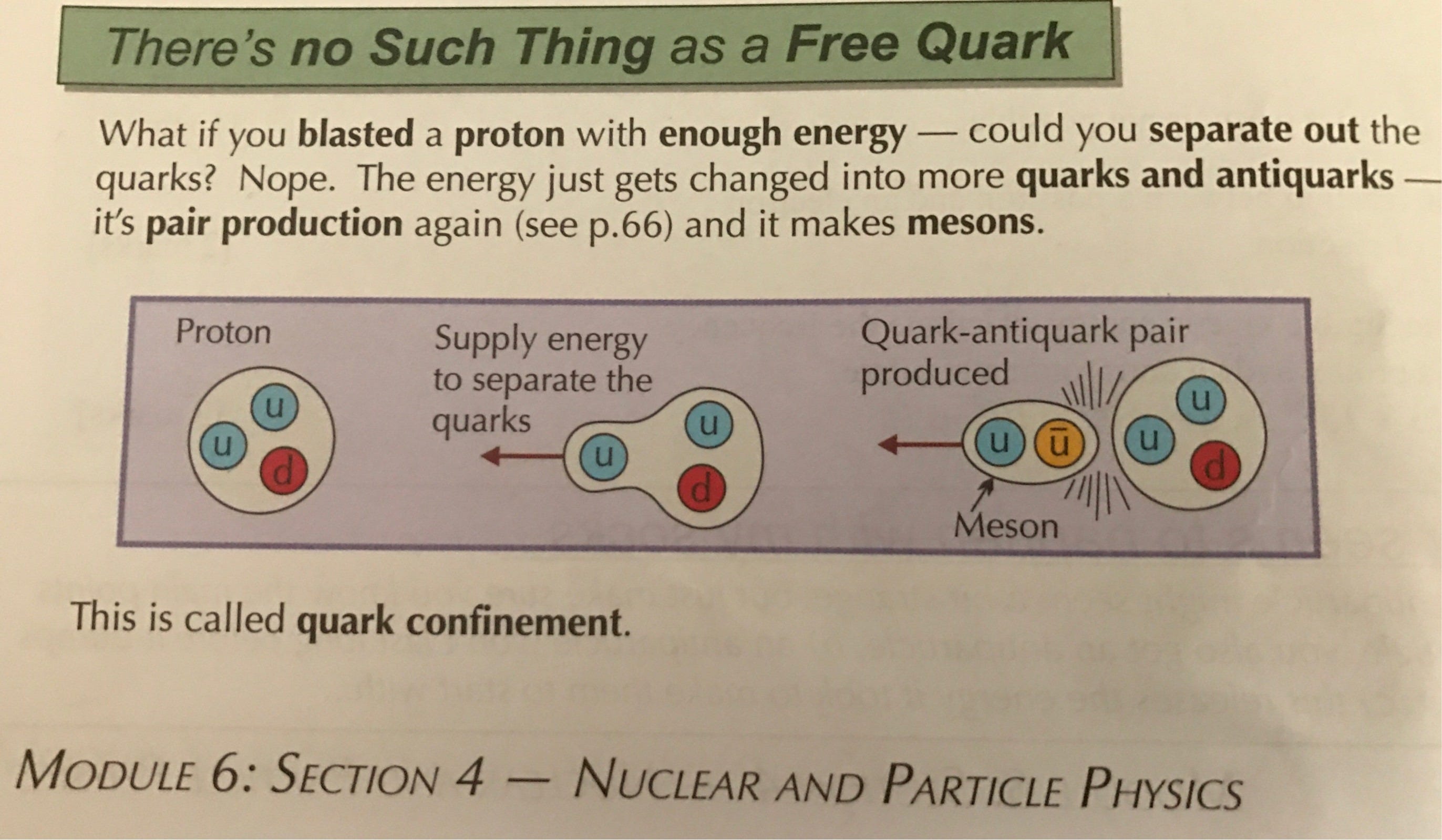
At a certain point, the energy stored in the stretched flux tube becomes so immense that it materializes into a new quark-antiquark pair, in accordance with Einstein’s mass-energy relation: E = mc2. These quark-antiquark pairs are called mesons, and they explain the low-energy behaviour of the strong force.
Instead of one lonely, isolated quark, you now have two separate pairs (mesons). Nature would rather create entirely new particles than allow a single quark to exist in isolation. This is why, despite decades of searching, we have never observed a “free” quark. We still haven’t proved it mathematically. But lattice QCD calculations and experimental observations confirm it’s existence.
Quark-Gluon Plasma
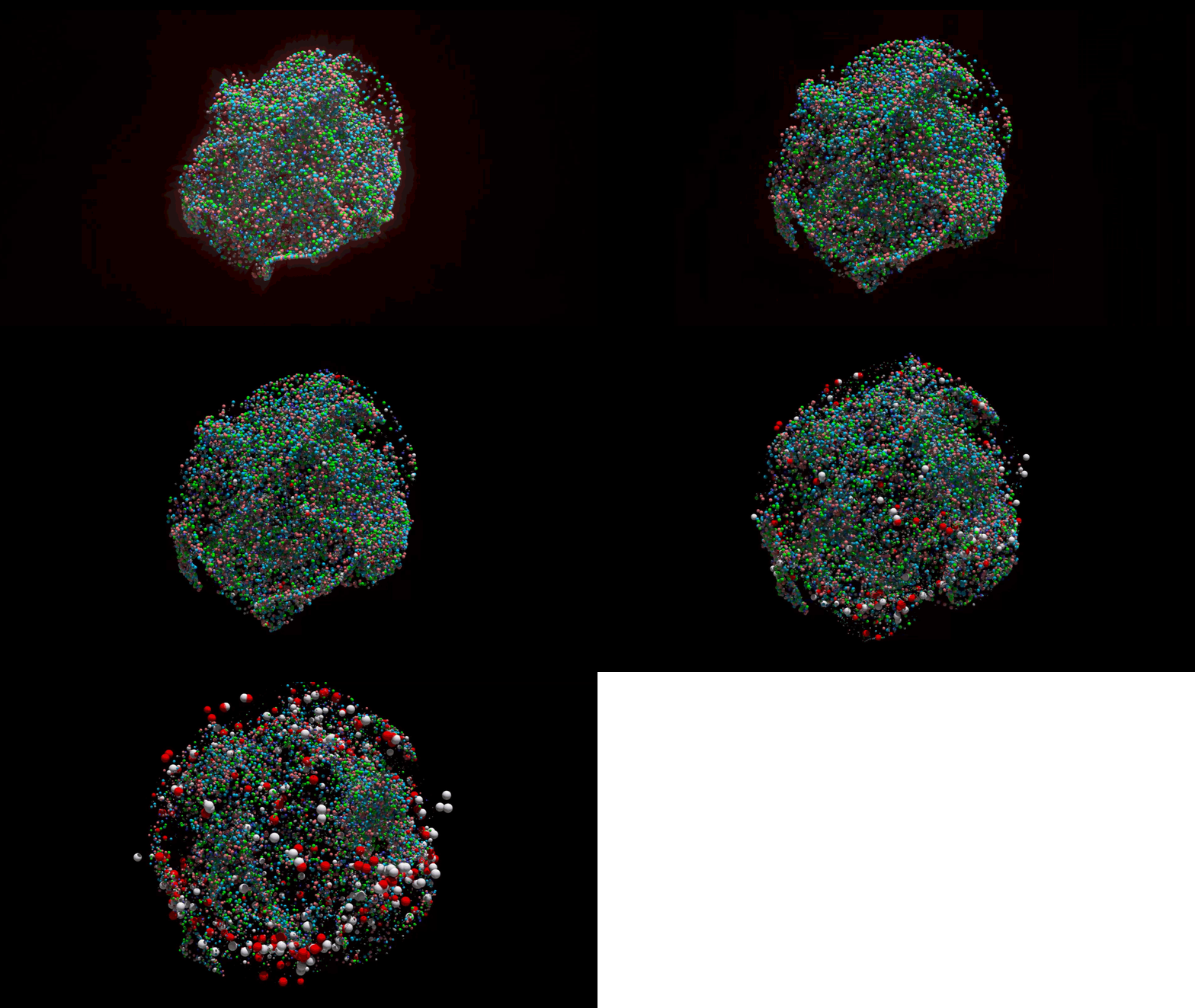
At the Large Hadron Collider (LHC) and the Relativistic Heavy Ion Collider (RHIC), physicists smash heavy nuclei (like Lead or Gold) together at nearly the speed of light. This creates temperatures over 5 trillion degrees Celsius—about 250,000 times hotter than the center of the Sun. At these temperatures, the quarks and gluons can break free and roam across a much larger volume.
For a fleeting trillionth of a second, we recreate a state of matter called Quark-Gluon Plasma (QGP). This is the “Primal Soup” that filled the entire universe just moments after the Big Bang, before it cooled down enough for protons to form. The data show that QGP behaves like a perfect fluid, i.e., it flows with almost zero internal friction (viscosity).
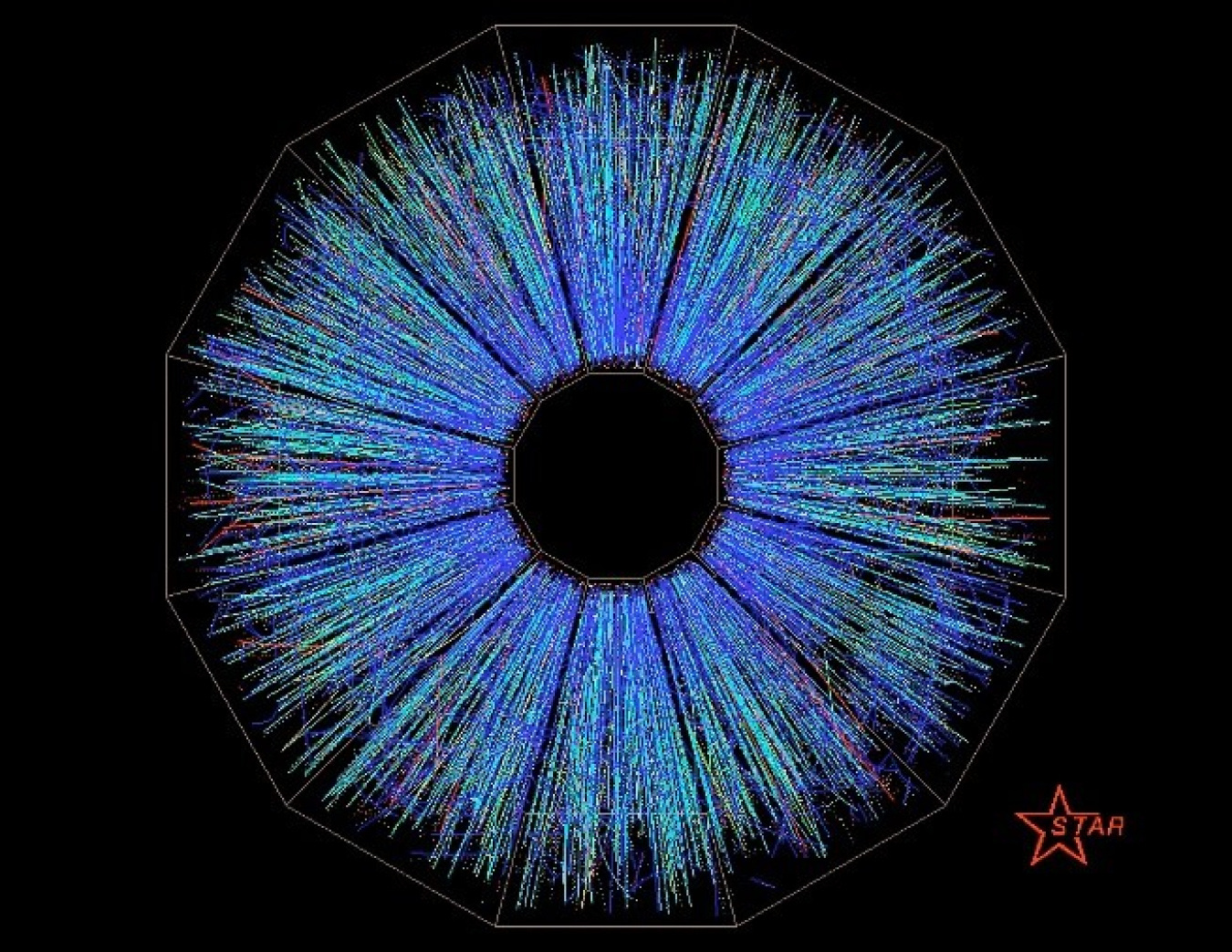
As this plasma expands and cools, the sticky nature of the gluons takes over again. The quarks find partners, the flux tubes reform, and the QGP freezes into the solid protons and neutrons that eventually became the stars, the planets, and you.
Next time
I will discuss the Standard Model, the periodic table of subatomic particles.
If you’ve read this far, you are interested in physics. Studying physics seriously isn’t affordable for everyone, both in terms of money and time. But what if I told you, you can learn it at the price of a coffee! Every week, I publish premium articles, where I deep dive into the history, future and mathematics of biggest ideas in physics, in a way, any layman can understand. If you’d like to actually understand how our world work, become a Bohring Deep-Diver. Buy the membership here:
To understand how the membership works, please read:

Got any questions? Ask me in the comments.

